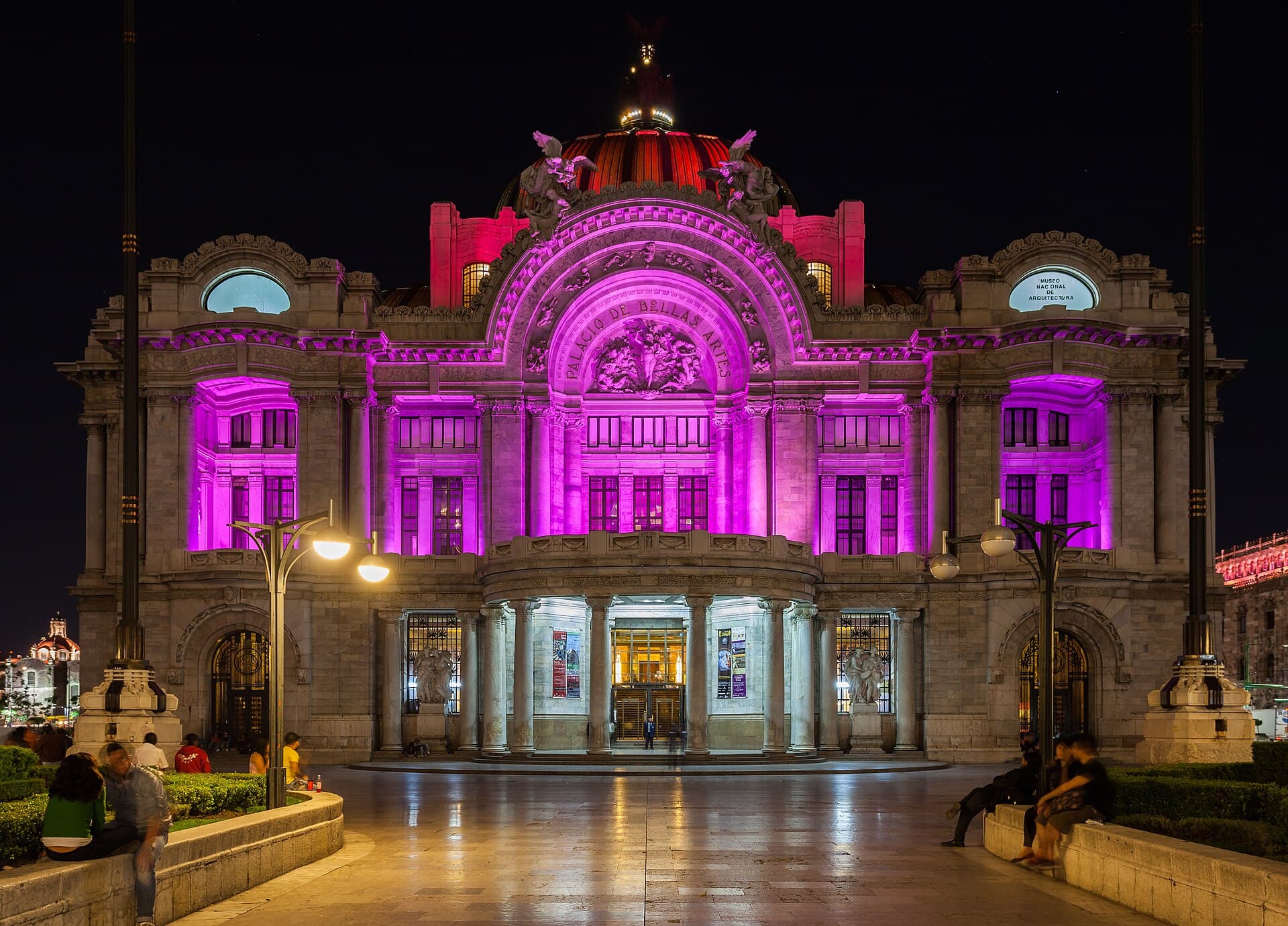
 Photo: Diego Delso · CC BY-SA 3.0
3 Days in Mexico City: Zócalo, Coyoacán & Chapultepec
Three classic days in Mexico City: the Zócalo and the historic center's museums on day one, Frida Kahlo and colonial Coyoacán on day two, and Chapultepec Park and Polanco's museums on day three. The plan re-plans itself around how you travel — your style, pace and budget.
Pick a style, a budget and a pace — the route and days below re-plan themselves.
9 stops · 6 meals · 3 hotelsThis is the editor’s pick.
3 days
Each day takes one part of Mexico City, kept close so you walk more than you ride. The map shows the whole route — pick a day to zoom in.
Come for Diego Rivera's sweeping History of Mexico murals on the grand stairwell. Visits are free with a guided tour — book the tour and give the murals a full hour.
One of the world's largest public squares: the ceremonial heart of Mexico since Aztec times, ringed by the cathedral, National Palace and Templo Mayor. Walk it at least once in the morning, once at night.
- See the Rivera murals inside the palace, then walk out onto the Zócalo — one outing, one block.
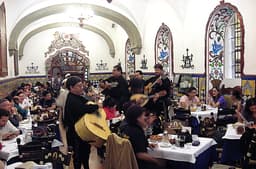
Worth the trip
One of the Historic Center's most traditional restaurants, founded in 1912 in a colonial mansion a few blocks from the Zócalo. Classic Mexican dishes with live music — a grand old dining room.
Closer: El Cardenal Centro, 6 min out of your way
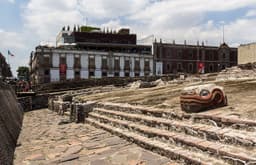
The excavated ruins of the Aztecs' Great Temple, plus an eight-hall museum of the offerings found on site — including the Coyolxauhqui stone. This is the pre-Hispanic heart of the city.
- Cross from the square to the excavated Aztec Great Temple — the historic core walks as one grid.
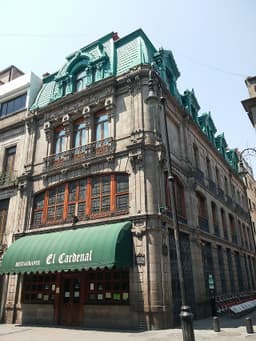
Beloved traditional Mexican restaurant since 1969, famous for its breakfasts: thick hot chocolate, fresh-baked bread, nata cream from its own dairy, and seasonal dishes like chiles en nogada. Start a center day here.
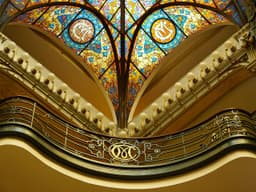
The grand dame of the Zocalo: an 1899 landmark hotel with a soaring Tiffany stained-glass ceiling and one of the city's great rooftop views. Sleep on the main square.
- Ask for a square-facing room — the rooftop terrace looks straight over the Zócalo.
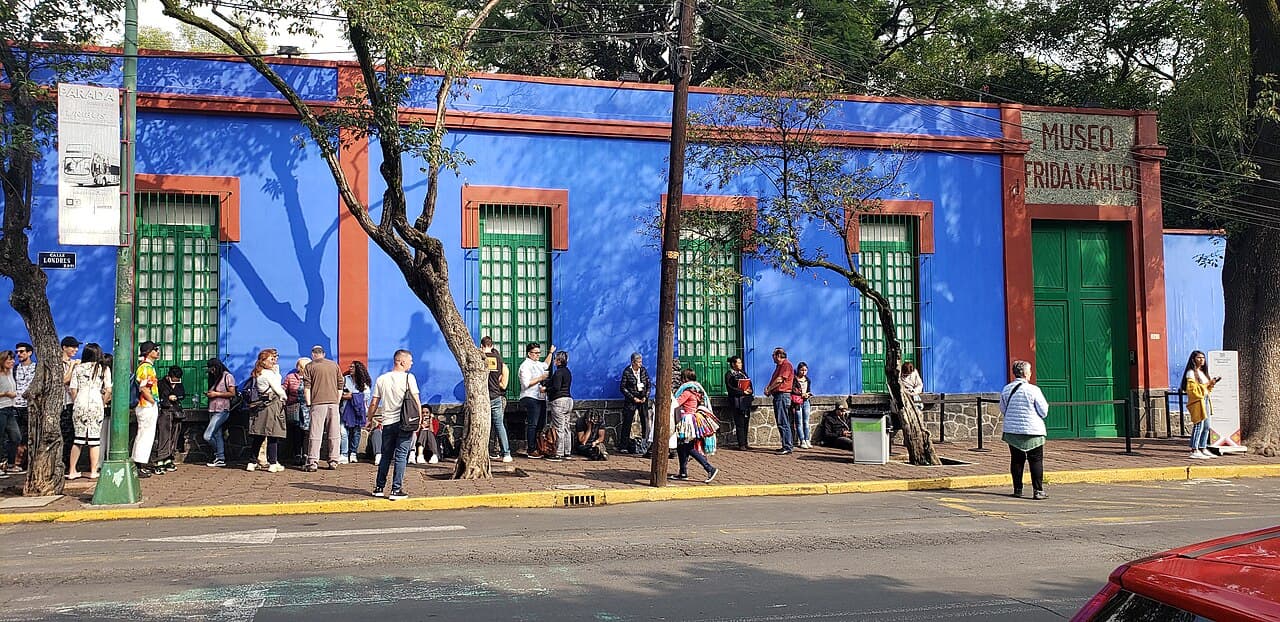
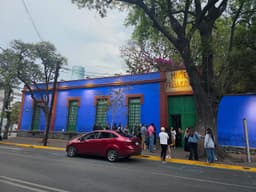
La Casa Azul: Frida Kahlo's birthplace and lifelong home, kept as she left it. Her studio, kitchen and garden, plus her paintings, dresses and personal artifacts — the emotional center of Coyoacán.
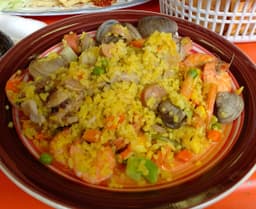
A traditional market with 500+ stalls of crafts, silver jewelry, piñatas and produce. Make for the Tostadas de Coyoacán counter in the middle — seafood and ceviche tostadas, eaten standing up.
- Tour La Casa Azul in the morning, then walk five minutes to the market and eat tostadas at the famous counter.
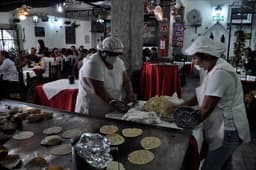
The one original 'El Morral' with 53 years of tradition in Coyoacán — a family-oriented Mexican restaurant on a cobbled square with enchiladas, tostadas, mole and signature seasonal dishes.
- When the market browsing is done, Fonda El Morral sits a minute away for a classic Coyoacán lunch.
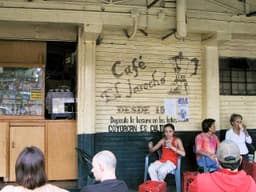
A beloved traditional coffee shop since 1953 — café de olla, cappuccinos and pastries at honest prices. Locals take their chairs onto the sidewalk for quiet evening coffees.
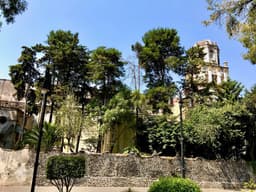
One of the city's three oldest churches: a 16th-century Franciscan parish on Coyoacán's main plaza with baroque altars, colonial art and a peaceful cloister. Step in between plaza stops.
Contemporary Mexican restaurant on Jardín Centenario since 1995: Oaxacan dishes, own-label Alipús mezcals and tasting flights, with a patio overlooking the plaza. The plaza-view dinner in Coyoacán.
Switch bases tonight. A beloved 3-star B&B in Coyoacán's Del Carmen: 7 individually decorated rooms around a garden, 7 minutes' walk from the Frida Kahlo Museum. Rated 9.2/10 from 222 reviews; prices from $124 to $151 per night.
- The Frida Kahlo Museum is 7 minutes on foot — stay here for the Coyoacán day.
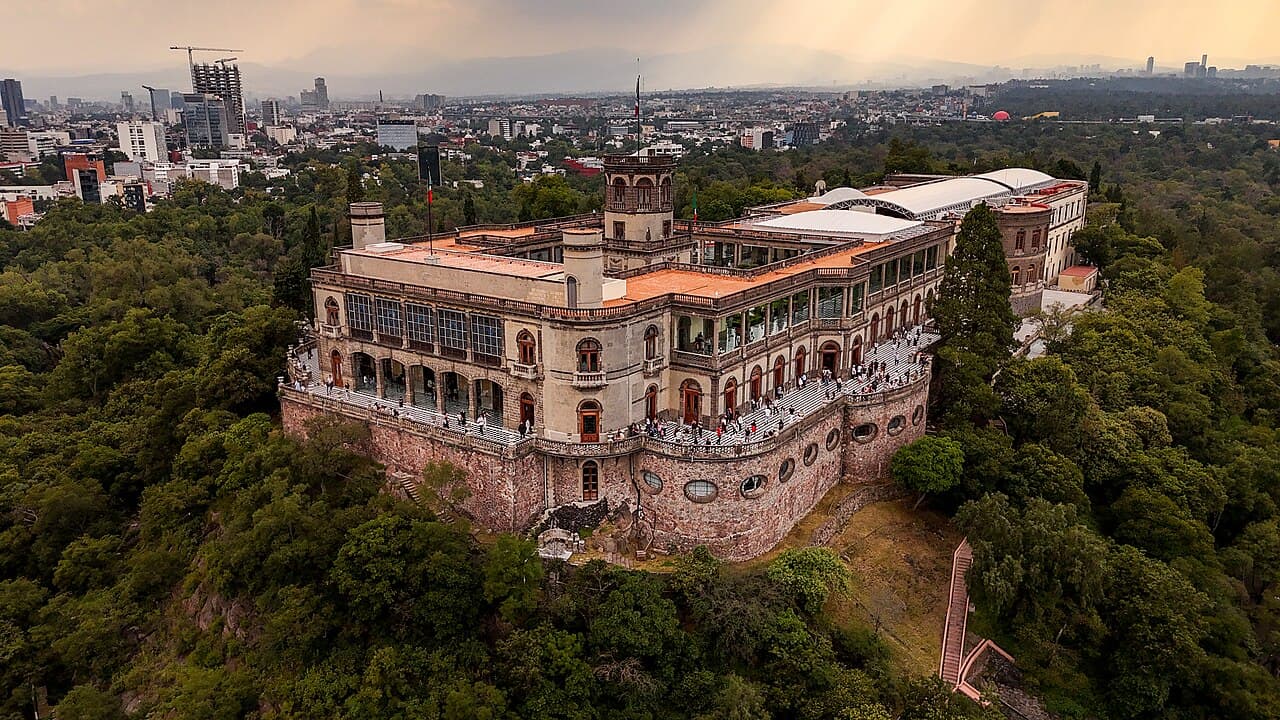
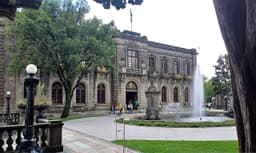
The hilltop castle holding the National History Museum: Maximiliano and Carlota's Alcazar rooms, the malachite room, and sweeping Reforma views from the terrace.
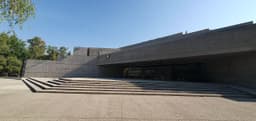
Rufino Tamayo's contemporary art museum, founded in 1981: his private collection of Picasso, Miró and Magritte plus rotating international exhibitions in a landmark building.
The Polanco branch of the Monterrey-born late-night taquería: tacos al pastor, chicharrón and campechanos at MXN 100–200 per person — an affordable meal in an upscale neighborhood.
The country's greatest museum: the Aztec Sun Stone, Olmec colossal heads and Maya halls around a landmark courtyard. Give it three hours minimum — this is Mexico City's must-see.
- Pair Tamayo's modern collection with the national anthropology museum — three minutes apart on Chapultepec's Reforma edge.
A classic two-story fonda in Zona Rosa — kindly grandpa waiters serve authentic Mexican comfort: caldo tlalpeño, romeritos con torta de camarón, huachinango and a mountain of perfect guacamole.
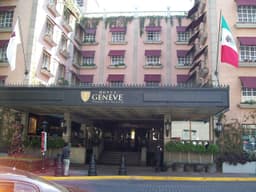
Switch bases tonight. A Zona Rosa institution since 1907: a mid-range classic with a lobby that doubles as a museum of the neighborhood's golden age.
- Wander the lobby — it doubles as a museum of the neighborhood's golden age.
Where to stay in Mexico City
Ranked for first-timer travelers on a comfortable budget. The places this plan sleeps in come first.
Gran Hotel Ciudad de Mexico
The grand dame of the Zocalo: an 1899 landmark hotel with a soaring Tiffany stained-glass ceiling and one of the city's great rooftop views. Sleep on the main square.
Casa Jacinta Guest House
A beloved 3-star B&B in Coyoacán's Del Carmen: 7 individually decorated rooms around a garden, 7 minutes' walk from the Frida Kahlo Museum. Rated 9.2/10 from 222 reviews; prices from $124 to $151 per night.
Hotel Geneve
A Zona Rosa institution since 1907: a mid-range classic with a lobby that doubles as a museum of the neighborhood's golden age.
Flights to Mexico City
Fly into MEX (MEX)
Flight results via Travelpayouts — we may earn a commission on bookings.
Getting around Mexico City
How to actually move around the city — transit, rideshare, bikes, and taxis.
Public transit
The backbone of the city: the Metro, Metrobús bus rapid transit, the integrated MI fare card, the Cablebús gondolas and city buses. Everything runs on the rechargeable Tarjeta de Movilidad Integrada.
- Metro
One of the largest subway systems in the Americas: 12 lines and nearly 200 stations reaching the Zócalo, Chapultepec, Coyoacán and most major sights. A single ride costs $5 MXN (about US$0.25).
Tip: Runs daily 5am to midnight. The first 2–3 cars are reserved for women and children during peak hours; ride outside 7–9am and 6–9pm to avoid the crush.
- Metrobús
Bus rapid transit on dedicated lanes: 7 lines and 283 stations covering areas the Metro misses. Standard fare is $6 MXN per ride, paid only with the MI card (contactless bank cards and Apple/Google Pay also work at turnstiles).
Tip: Line 4 connects the airport to downtown: the Quetzalcóatl route runs from Amajac on Paseo de la Reforma to airport terminals 1 and 2 for $30 MXN, daily 4:30am–midnight.
- Tarjeta de Movilidad Integrada (MI)
The single rechargeable card for the Metro, Metrobús, Cablebús, RTP buses and Ecobici — and often the only payment method accepted. Buy it for $15 MXN at vending machines in any Metrobús station.
Tip: Get one on your first day; you cannot pay cash on the Metro or Metrobús.
- Cablebús
The city's gondola lift system: 3 lines and 19 stations. Line 3 links the four sections of Bosque de Chapultepec out to Santa Fe, and Line 2 in Iztapalapa is the longest urban cable-car line in the world (10.55 km). Fare is $7 MXN with the MI card.
Tip: Ride Line 3 for aerial views over Chapultepec park — it's genuinely useful for tourists, not just commuters.
Rideshare
Uber, DiDi and Cabify all operate widely in Mexico City and are the go-to for visitors — generally safer and more convenient than hailing a street cab, especially at night.
- Uber
The most widely used rideshare app in the city, with UberX, Comfort and airport pickups. Fares are cheap by international standards.
Tip: Use Uber at night and for airport runs; agree nothing in advance — the app sets the price.
- DiDi
The main local rival to Uber, often slightly cheaper with frequent promos. Works the same way: app-set fares, card or cash payment.
Tip: Worth having as a backup when Uber surges during rain or rush hour.
- Cabify
A third rideshare option operating in Mexico City, popular with business travelers.
Tip: Useful when Uber and DiDi are both surging.
Bikes
Flat central neighborhoods make cycling easy: the Ecobici bike-share covers Roma, Condesa, Juárez, Polanco and Centro, and every Sunday Paseo de la Reforma closes to cars for the Muévete en Bici ride.
- Ecobici
The city's public bike-share, with hundreds of docking stations across the central neighborhoods. Bikes unlock with the same MI transit card.
Tip: Best for short hops between Roma, Condesa and Juárez — stations are densest there.
- Muévete en Bici (Sunday ciclovía)
Every Sunday, Paseo de la Reforma and other major avenues close to car traffic for the city's weekly bike ride — ride an Ecobici or your own bike through the empty boulevard.
Tip: Go before 10am for the emptiest streets; the closure typically runs until early afternoon.
Taxis
Taxis are everywhere, but visitors should use authorized sitio (radio) taxis or the official App CDMX rather than hailing cars off the street. No tip is expected in taxis; 10% is customary in restaurants.
- Sitio (authorized) taxis
Licensed taxi stands (sitios) at hotels, airports and busy corners; the fare is set or metered and the car is registered. Avoid hailing unmarked street cabs, especially at night.
Tip: Ask your hotel to call a sitio taxi, or walk to the nearest marked stand — never get into an unmarked car.
- App CDMX
The city government's official app, which includes hailing and paying for authorized taxis at regulated rates.
Tip: Download it before you arrive so you can pay official taxis by card without negotiating.
Keep exploring
More itineraries for this trip.
- Photo: Diego Delso · CC BY-SA 3.03 days
3 Days in Mexico City: A Fine-Dining Michelin Tour
Three days built around Mexico City's Michelin-listed and world-renowned fine-dining rooms: tasting menus at Quintonil, Rosetta and the Michelin-listed Meroma, Contramar's pescado a la talla, El Cardenal's famous breakfasts — with museums, the Zócalo and Chapultepec between meals. The plan re-plans itself around how you travel — your style, pace and budget.
Read the itinerary → - Photo: Diego Delso · CC BY-SA 3.01 day
1-Day Mexico City Food Crawl: Tacos, Mercados & Chef Stops
A one-day eating route through Roma Norte, Condesa and the Centro Histórico: legendary tacos al pastor stands, grazing through Mercado Roma and Mercado de San Juan, fresh churros at El Moro and a chef-driven lunch in Roma. The plan re-plans itself around how you travel — your style, pace and budget.
Read the itinerary → - Photo: Diego Delso · CC BY-SA 3.05 days
5 Days in Mexico City: Zócalo to Frida Kahlo, Markets & Roma Eats
Five days in Mexico City done right: day one in the colonial center — the Zócalo, Templo Mayor and Bellas Artes — day two among Chapultepec's great museums and castle, day three through Roma and Condesa's parks, markets and food scene, day four in colonial Coyoacán with the Frida Kahlo Museum, and day five up Reforma's monuments and Juárez museums. The plan re-plans itself around how you travel — your style, pace and budget.
Read the itinerary → - Photo: Diego Delso · CC BY-SA 3.02 days
2 Days in Mexico City: Historic Center, Chapultepec & Roma Eats
A weekend sprint through Mexico City: day one in the historic center — the Zócalo, the Templo Mayor and Bellas Artes — day two among Chapultepec's museums and castle, with evenings in the Roma and Condesa food scene. The plan re-plans itself around how you travel — your style, pace and budget.
Read the itinerary →