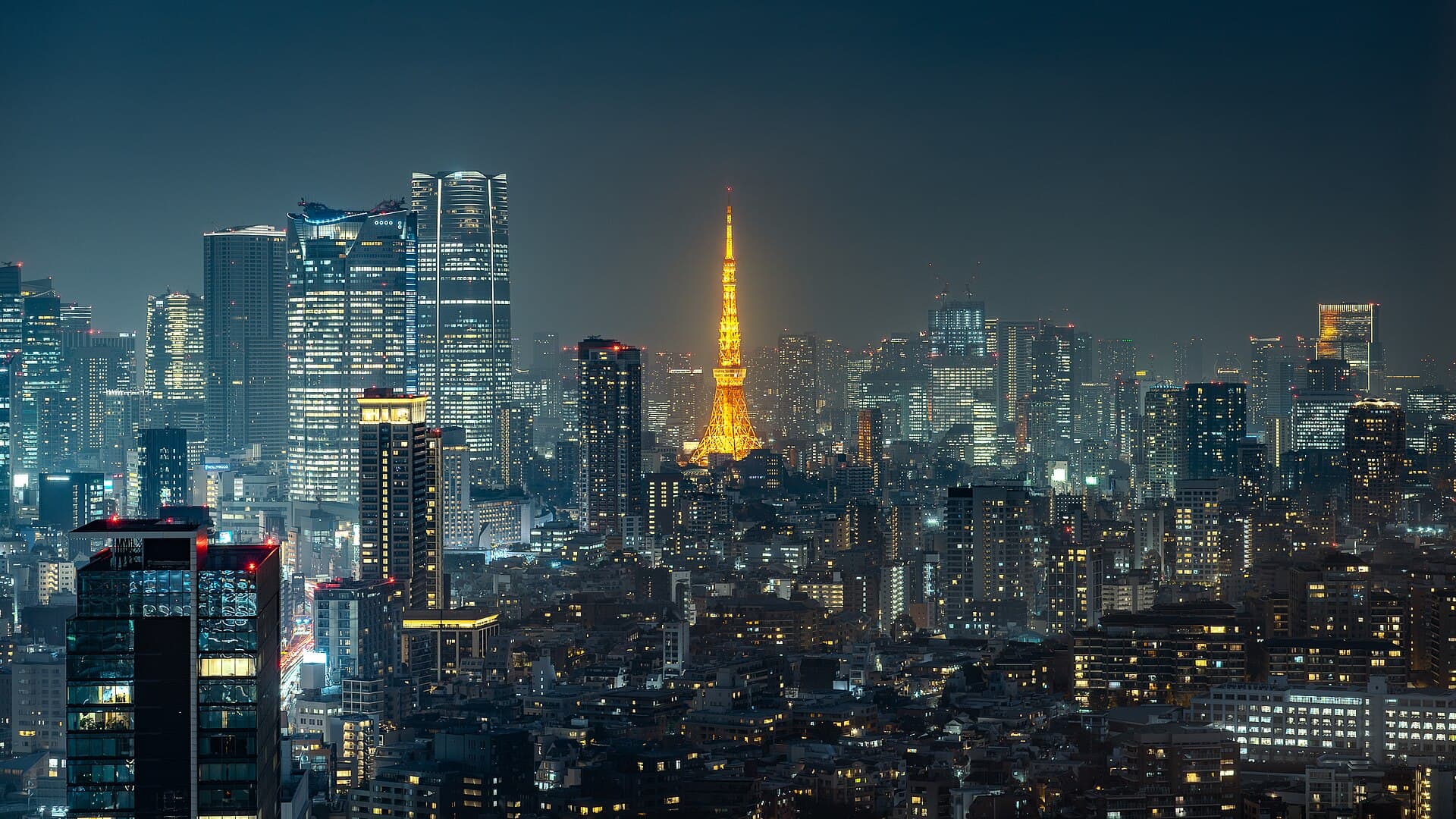
 Photo: David Kernan · CC BY 4.0
5 Days in Tokyo & Osaka: The Food Lover's Itinerary
Five days eating your way from Tsukiji to Dotonbori: Tokyo's morning markets, old-town Asakusa, Ueno's market streets and Shinjuku's night alleys, then a shinkansen hop to Osaka for the castle, Shinsekai's kushikatsu counters and a Dotonbori finale. The plan re-plans itself around how you travel — pick a pace, budget and style and it reshuffles the days.
Pick a style, a budget and a pace — the route and days below re-plan themselves.
14 stops · 10 meals · 2 hotels · 1 transferThis is the editor’s pick.
5 days, 2 cities
From Tokyo to Osaka, with 1 move between cities. The map shows the whole route — pick a day to zoom in.
Tokyo
Ginza & Tsukiji · Asakusa · Shinjuku
- Day 1Ginza & Tsukiji: Tsukiji Outer Market & Ginza Six
- Day 2Asakusa: Nakamise Shopping Street & Kappabashi Kitchenware Street
- Day 3Shinjuku: Omoide Yokocho & Golden Gai
- Flight to Osaka · 3h 30m
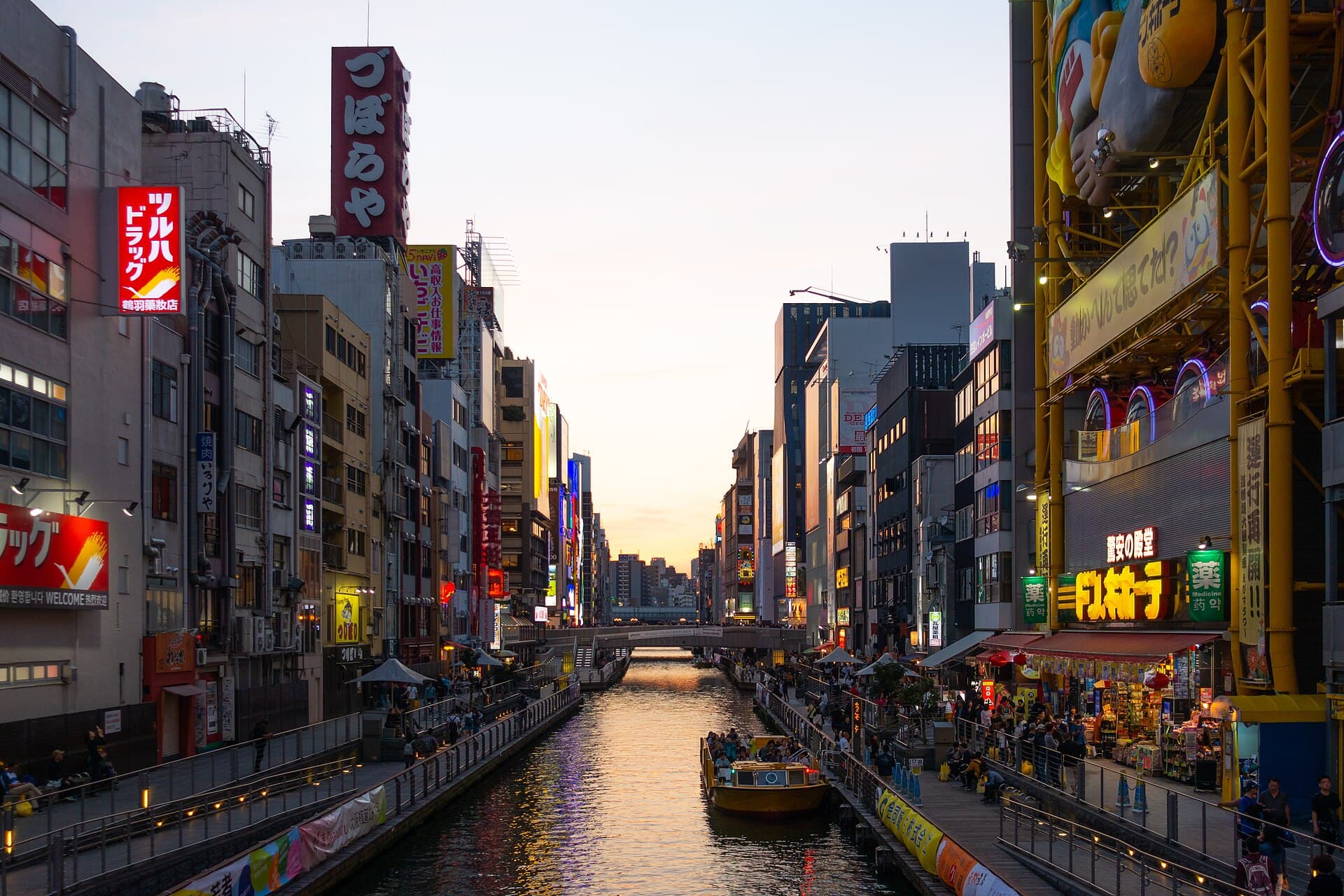
Osaka
Shinsekai & Tennoji · Namba & Dotonbori
- Day 4Shinsekai & Tennoji: The Shinsekai streets & Janjan Yokocho
- Day 5Namba & Dotonbori: Kuromon Ichiba Market & Dotonbori
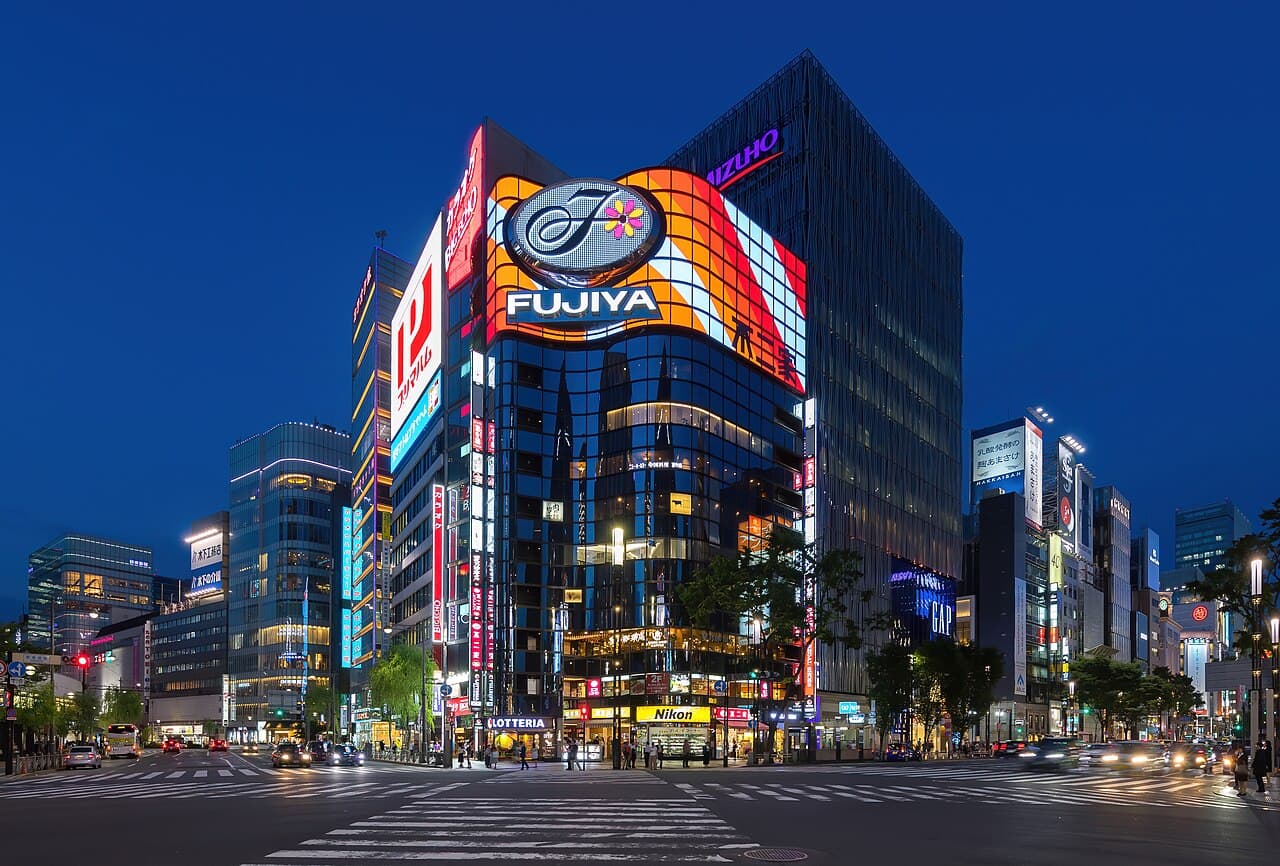
Ginza's flagship luxury complex with a rooftop garden and a basement food hall worth a browse between tastings.
Sweet rolled-omelette sticks from the market stalls. The classic Tsukiji graze — eat one while you walk.
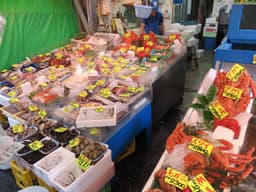
The street-food half of the world's largest fish market: tuna bowls, tamagoyaki, knife shops. The trip's opening move — go in the morning, hungry.
- Arrive early: this is the world's largest fish market and the best stalls draw lines.
- Tsukiji's street-food half leads straight into the tamagoyaki stalls — graze from tuna bowls to sweet rolled omelette in one walk.
Tempura and kaiseki near Tsukiji Station. Refined lunch sets a short walk from the market.
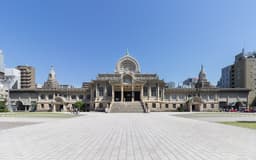
Indian-influenced Buddhist temple by the market; a striking, quiet stop before the Tsukiji food run.
- Pause at the striking Indian-influenced temple, then walk into the market's food stalls.
Ginza outpost of the tempura house, running since 1924, on Matsuya's 8th floor. Polished and central.
- On Matsuya Ginza's 8th floor; the house dates to 1924.
MUJI's minimalist hotel above its flagship store: calm wood-and-linen rooms in Ginza.
Retro kissaten coffee shop near Sensō-ji. A mid-morning break in old-Tokyo style.
Wholesale kitchenware street famous for plastic food samples, chef knives and ceramics. A foodie browse even if you buy nothing.
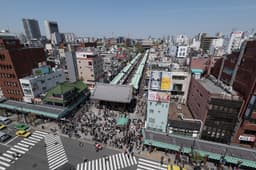
One of Japan's oldest shopping streets, running from Kaminarimon to Sensō-ji. Walk it hungry: melon pan, ningyo-yaki and senbei stalls line the whole approach.
Tempura institution near Sensō-ji, operating since 1887. The tendon rice bowl is the order — crisp shrimp and vegetables over rice.
- Order the tendon; the shop has run since 1887.
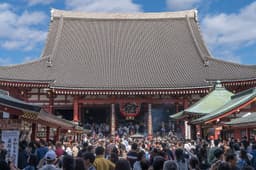
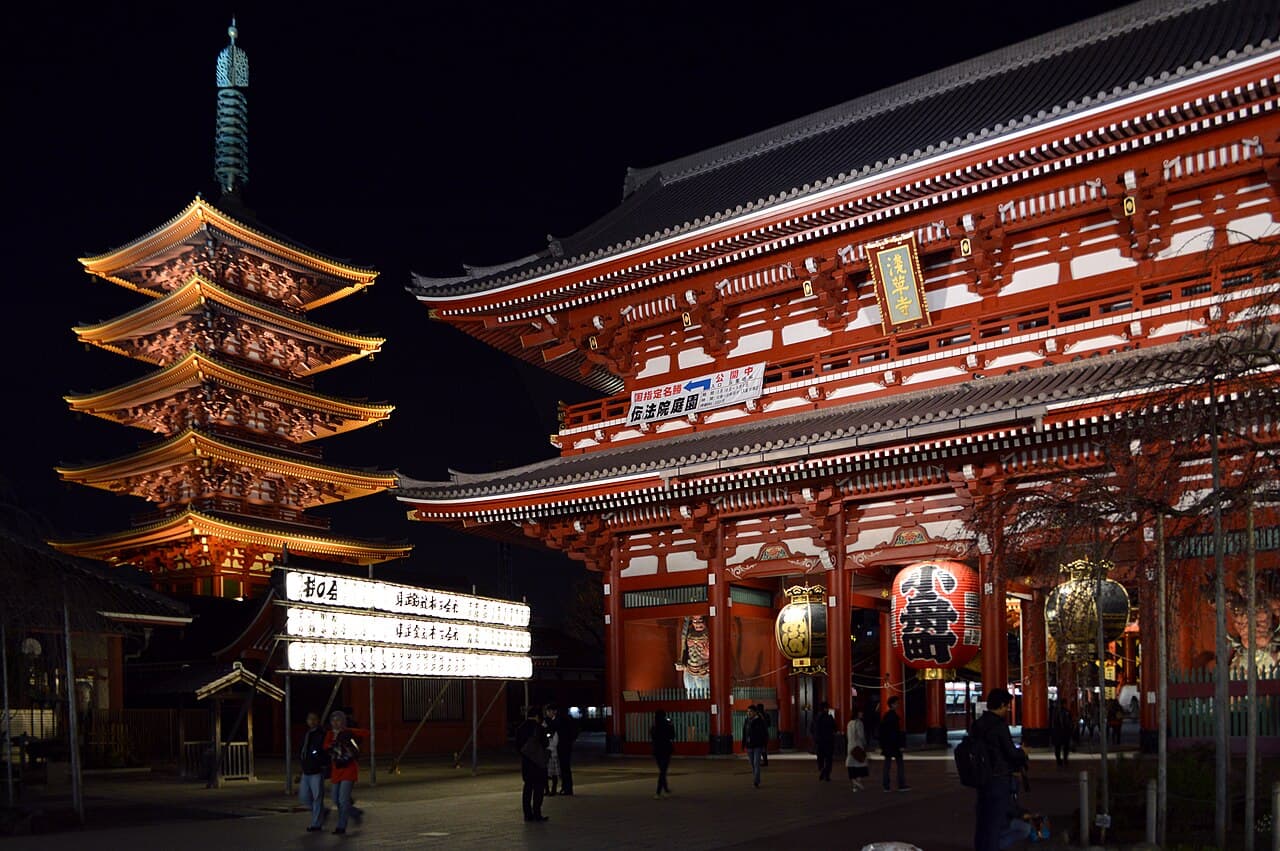
Tokyo's oldest temple, founded in 628. Walk through the Kaminarimon Thunder Gate to the main hall and five-storied pagoda. Go before 9am — it draws about 30 million visitors a year.
- Go before 9am; it draws about 30 million visitors a year.
- Temple first, then the snack street — Sensō-ji opens directly onto Nakamise.
Cook-your-own okonomiyaki and monjayaki in a folk-craft house near Sensō-ji. Messy, fun, and very Asakusa.
Legendary melon-pan bakery on the Nakamise approach. Buy it hot — the classic Asakusa snack.
- Start the Nakamise snack run at the legendary melon-pan bakery on the approach.
Stay put: ~32 min by subway back from Sensō-ji Temple tonight, ~31 min by subway to Golden Gai in the morning.
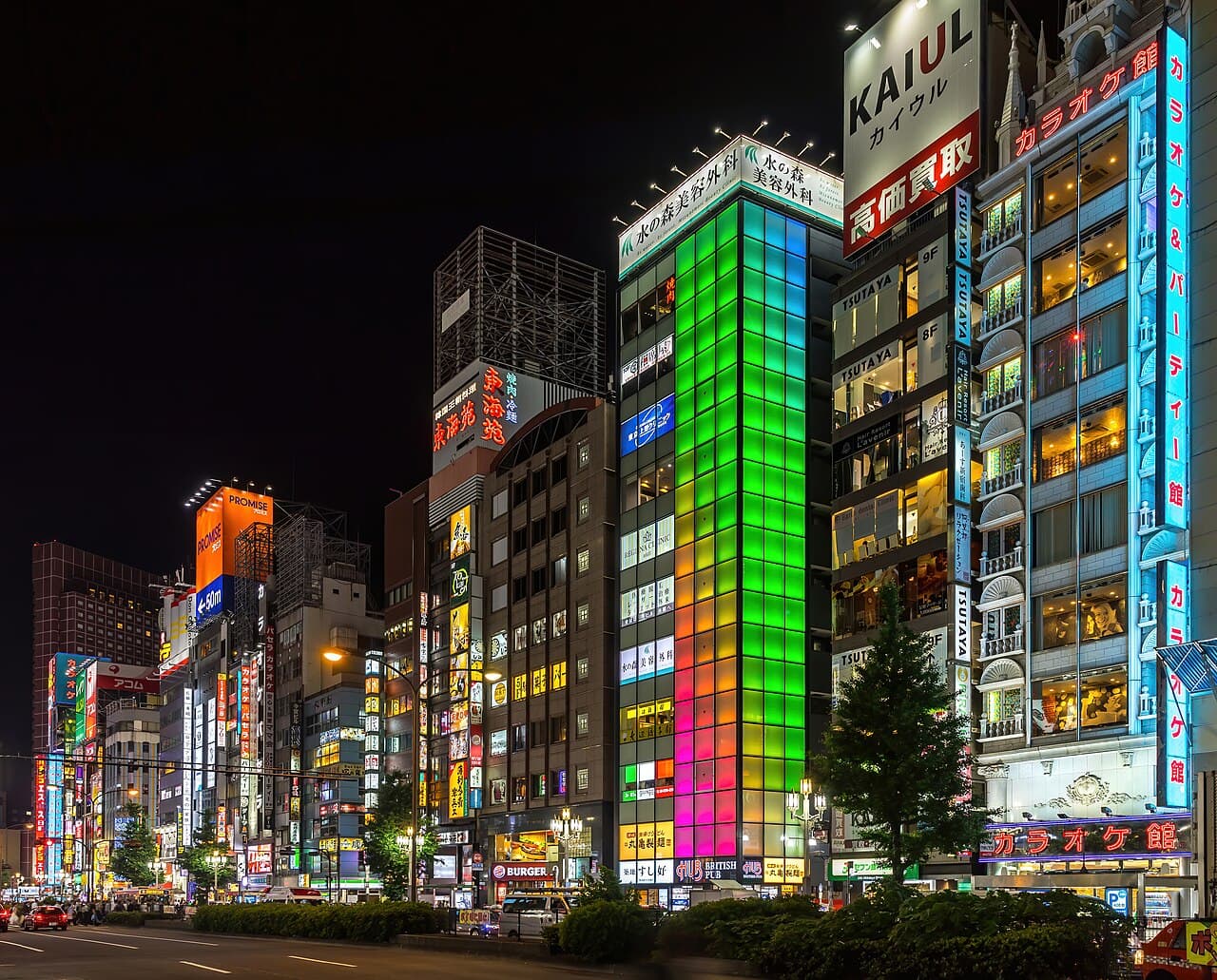
Tempura counter founded in 1923; lunch sets from about 1,000 yen. The value tempura benchmark.
- Lunch tempura sets run about 1,000-1,500 yen.
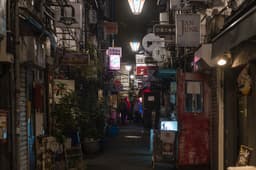
Six alleys of 200-plus matchbox bars, each seating a handful of people. The soul of old Shinjuku nightlife — bar-hop slowly.
- Between bar alleys, the 1923 tempura counter is the sit-down anchor.
Guided evening bar-hop through Omoide Yokocho and Golden Gai's tiny bars. Good if the alley maze feels intimidating solo.
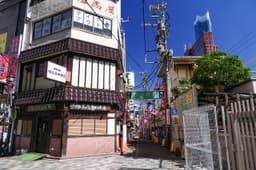
Memory Lane: a warren of yakitori grills and ramen counters under the Shinjuku tracks. This is where the night starts.
- Yakitori smoke under the tracks, then the matchbox bars of Golden Gai — Shinjuku's night in two acts.
Old-school tonkatsu in Kabukicho since 1946. Crisp cutlets, shredded cabbage, no surprises.
- Operating since 1946 — the Kabukicho classic.
Stay put: ~33 min by subway back from Omoide Yokocho tonight, ~31 min by subway to Golden Gai in the morning.
Tokyo to Osaka
403 km, rated for speed and cost. For a foodie trip on a comfortable budget at a balanced pace, take the Domestic flight (JAL, ANA, Peach, Jetstar). It's only 5 min slower than the quickest option, at $ instead of $$.
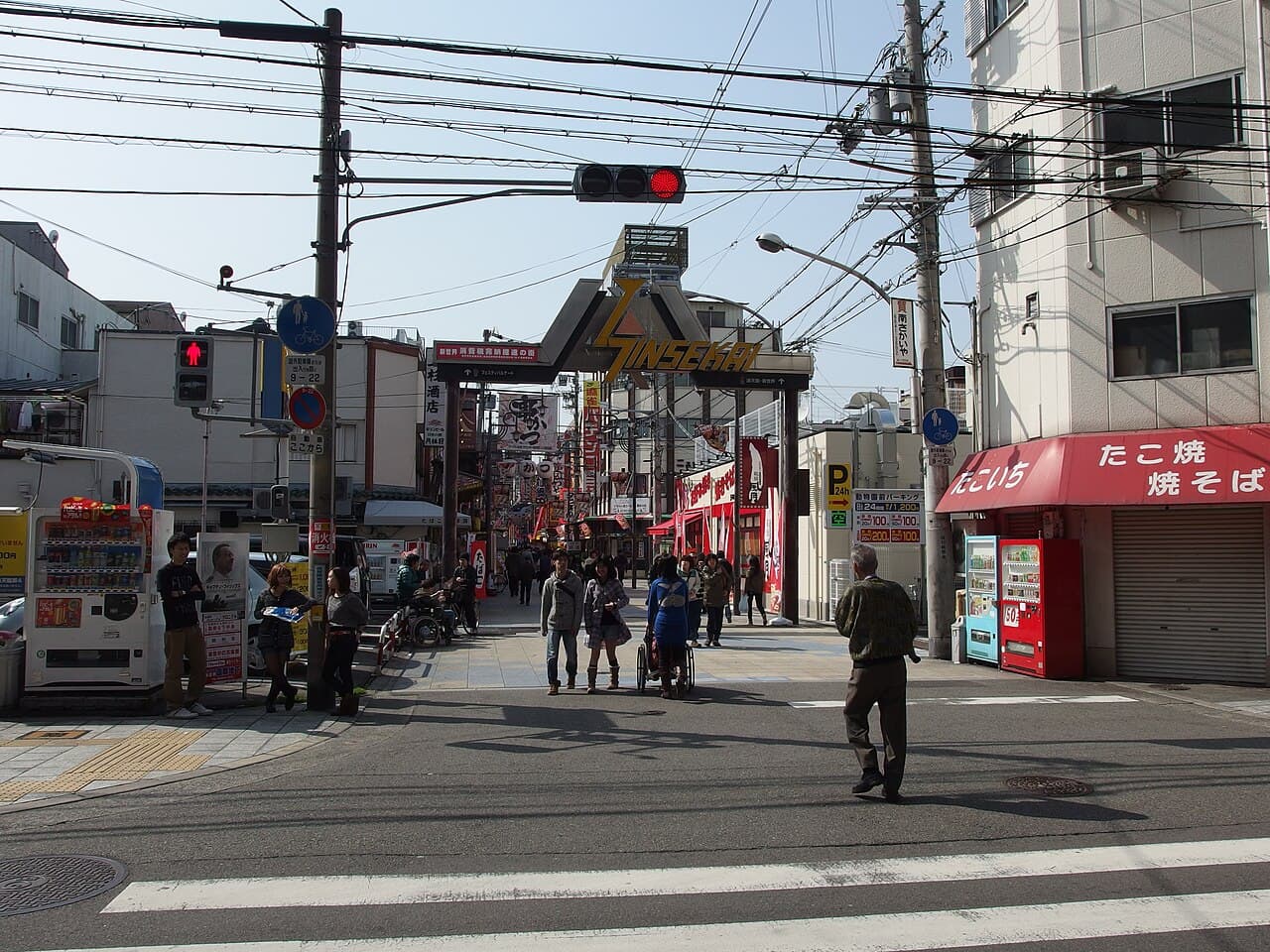
Beloved old-school kushikatsu counter in Shinsekai. Skewers from about 150 yen draw long queues of locals — cash only, counter seating.
- Skewers from about 150 yen; closed Thursdays, open 10:30-20:30 other days; cash only.
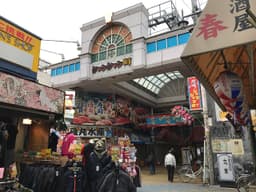
Narrow retro alley under the railway tracks packed with standing bars, cheap izakaya and old-school eateries.
- Yaekatsu's 150-yen skewers reward the Janjan Yokocho wander; expect a queue.
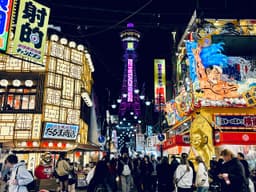
Showa-era streetscape of giant food signs, kushikatsu shops and retro arcades under the Tsutenkaku tower. Osaka's flavor concentrated.
- The retro streetscape flows into Janjan Yokocho's standing bars.
The original 1929 kushikatsu shop, birthplace of the no-double-dip rule. Tiny, atmospheric and beloved — the one to queue for.
- Founded in 1929 in Shinsekai; famous for the 'no double dipping' rule.
Design hotel with onsen, garden and local-neighborhood guides. A stylish gateway to Shinsekai.
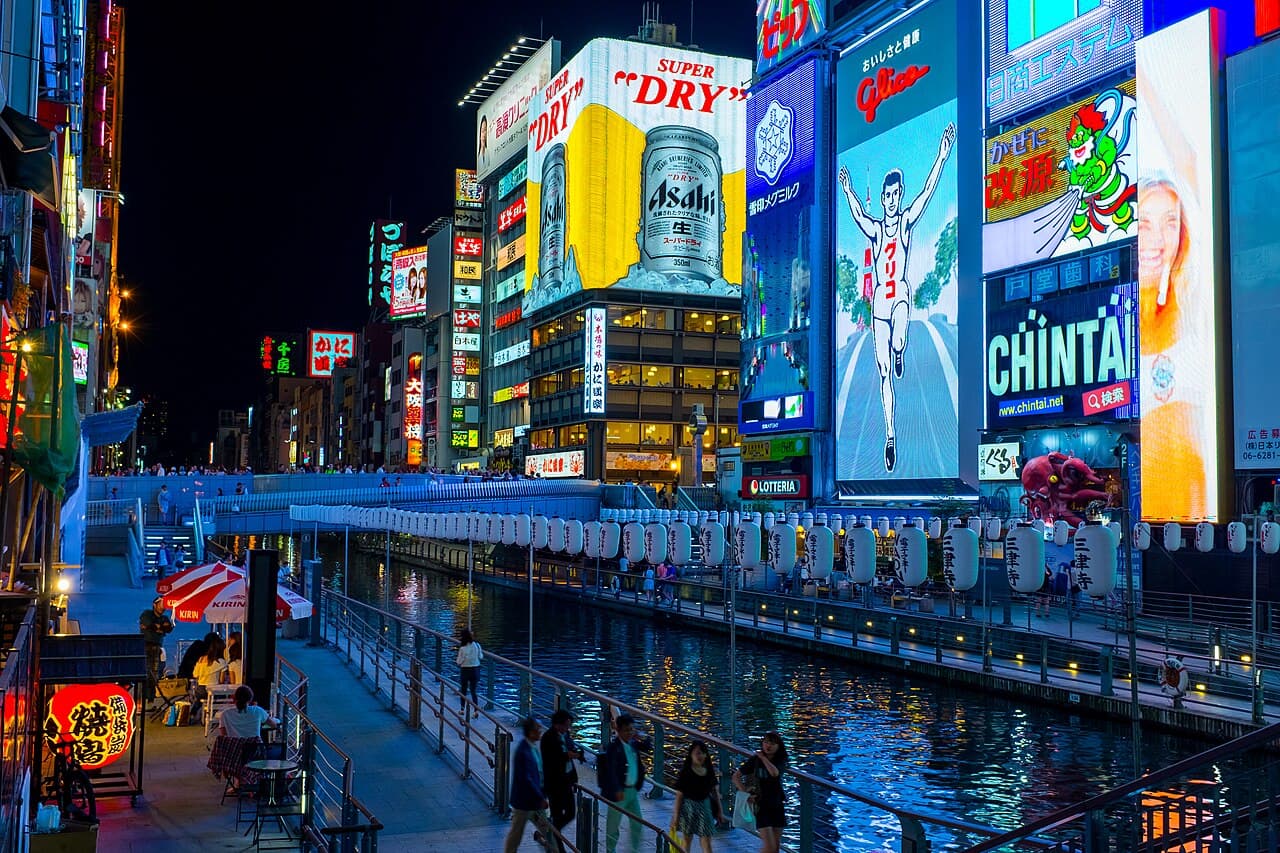
Specialty coffee roaster in Minami — start the day with a serious cup before the Kuromon run.
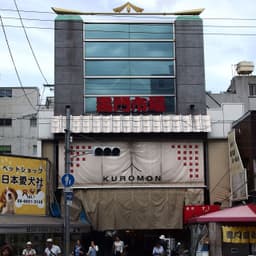
Osaka's kitchen: a covered market arcade with roughly 150 shops of fresh seafood, produce and ready-to-eat street food. A morning grazing run.
- Roughly 150 shops along the arcade — go before lunch for the full spread.
Big okonomiyaki house in Dotonbori serving Osaka specialties: okonomiyaki, takoyaki and kushikatsu. Dinner around 3,000 yen, lunch around 1,500 yen — great for groups.
- Dinner averages around 3,000 yen, lunch around 1,500 yen.
Osaka-born dessert icon famous for its jiggly, half-baked cheese tarts. Take one to go.
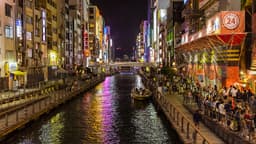
Osaka's canal district: giant neon signs, theaters and street-food stalls along the canal dug in 1612. The trip's finale — come at night when the signs light up.
- Walk the canal at night; it was dug in 1612 and the neon is the point.
- After the neon, the big okonomiyaki house — takoyaki, okonomiyaki and kushikatsu under one roof.
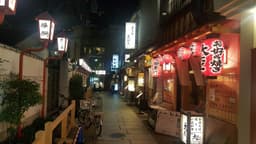
Stone-paved alley of lantern-lit traditional restaurants beside Hozenji Temple. A pocket of old Osaka in Minami — walk it after dark.
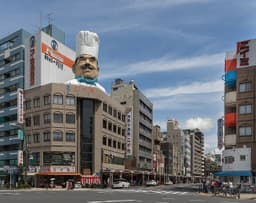
Iconic kushikatsu branch under the big chef sign: crispy deep-fried skewers with the famous no-double-dip sauce rule. The Dotonbori ritual.
- Osaka's rule: no double-dipping skewers in the shared sauce.
- Graze Kuromon's 150 stalls by day; finish at Daruma by night.
Closer: Chibo Dotonbori Honten, 3 min out of your way
Stay put: ~14 min by subway back from Hozenji Yokocho tonight, ~12 min by subway to Kuromon Ichiba Market in the morning.
Where to stay in Tokyo & Osaka
Ranked for foodie travelers on a comfortable budget. The places this plan sleeps in come first.
Tokyo
MUJI Hotel Ginza
MUJI's minimalist hotel above its flagship store: calm wood-and-linen rooms in Ginza.
Asakusa View Hotel
Landmark high-rise by Sensō-ji with Skytree-view rooms and a rooftop. Ask for the Skytree side.
The Gate Hotel Kaminarimon
Design hotel two minutes from Kaminarimon with a rooftop terrace overlooking the temple.
Osaka
Hoshino Resorts OMO7 Osaka
Design hotel with onsen, garden and local-neighborhood guides. A stylish gateway to Shinsekai.
Hotel Chuo Oasis
Budget hotel with a public bath in Shin-Imamiya. A local favorite for cheap stays.
Sotetsu Grand Fresa Osaka-Namba
Mid-range business hotel minutes from Dotonbori with breakfast buffet and easy station access.
Flights to Tokyo & Osaka
Fly into Narita International Airport (NRT)
Flight results via Travelpayouts — we may earn a commission on bookings.
Getting around Tokyo & Osaka
How to actually move around each city — transit, rideshare, bikes, and taxis.
Tokyo
Public transit
Trains and subways run the city — JR lines including the Yamanote loop plus the Tokyo Metro and Toei subway networks. A rechargeable IC card (Suica or Pasmo) works on all of them; paper day passes help only if you ride the subway a lot.
- Tokyo Subway Ticket (24/48/72h)
Unlimited rides on all Tokyo Metro and Toei subway lines; buy at airports and major stations.
Tip: For most visitors, a rechargeable IC card plus phone maps is simpler than juggling paper passes.
Rideshare
Uber operates in Tokyo, but only through licensed taxi companies — the app summons a regular taxi, not a private car. Expect taxi-meter pricing.
Bikes
Docked share bikes all over the city, handy for short hops between stations.
- Docomo Bike Share
Tokyo's big docked bike-share network — pick up and drop off at hundreds of ports around central Tokyo.
Tip: Register in the app before you need it; ports near stations fill up at rush hour.
Taxis
Flag licensed taxis at station ranks or hail one from your phone. Fares are metered and doors open automatically — don't grab the handle.
- GO taxi app
Japan's main taxi-hailing app — summons a licensed taxi with in-app payment; set destinations without speaking Japanese.
Tip: Works in Kyoto and Osaka too, so keep it for the whole trip.
Osaka
Public transit
The Osaka Metro (Midosuji, Chuo, and six other lines) plus JR and private railways cover the city. IC cards work on everything.
- Osaka Metro day passes
Unlimited Osaka Metro and city bus rides — the Enjoy Eco Card covers weekdays, the weekend/holiday version is cheaper.
Tip: The Midosuji Line connects Umeda, Shinsaibashi, and Namba — most visitors live on it.
Rideshare
Uber operates in Osaka through licensed taxi companies — the app summons a regular taxi.
- Uber
Uber works in Osaka via licensed taxis — same app as home, metered pricing.
Bikes
Osaka is flat, so bikes are a genuinely fast option for the central districts.
- Osaka Bike Share (Docomo)
Docomo's docked share bikes across the city center — unlock with the app and drop off at any port.
Tip: Check the app for e-bike availability before a long ride along the bay.
Taxis
Licensed taxis are easy to find at stations and in Namba/Umeda. For late nights or rain, the app beats the curb.
- GO taxi app
Hail licensed taxis from your phone with in-app payment.
Tip: Works in Tokyo and Kyoto too, so keep it for the whole trip.
Keep exploring
More itineraries for this trip.
- Photo: David Kernan · CC BY 4.09 days
9 Days in Tokyo, Kyoto, Nara & Osaka: The Complete Golden Route
Japan's classic first-timer route, stretched to nine days with Nara in the middle: three days in Tokyo, three in Kyoto, a day trip to Nara, and two in Osaka. Tokyo brings the neon, the temples of Asakusa and the food halls of Ginza; the Shinkansen drops you in Kyoto for Fushimi Inari, Gion and Arashiyama; then it's south to Nara for Todai-ji's Great Buddha and the deer of Nara Park; and finally west to Osaka, Japan's kitchen, for Dotonbori street food, the castle and retro Shinsekai. The plan re-plans itself around how you travel: classic, foodie or family, fast or slow.
Read the itinerary → - Photo: David Kernan · CC BY 4.07 days
7 Days in Tokyo, Kyoto & Osaka: The Golden Route
Japan's classic first-timer week: three days in Tokyo, two in Kyoto, two in Osaka. Tokyo brings the neon, the temples of Asakusa and the food halls of Ginza; the Shinkansen drops you in Kyoto for Fushimi Inari, Gion and Arashiyama; then it's west to Osaka, Japan's kitchen, for Dotonbori street food, the castle and retro Shinsekai. The plan re-plans itself around how you travel: classic, foodie or family, fast or slow.
Read the itinerary → - Photo: David Kernan · CC BY 4.05 days
5 Days in Tokyo & Kyoto: Japan's Two Essential Cities
Japan's two essential cities in one trip: three days in Tokyo — Asakusa's temples, Shibuya's scramble, Shinjuku's neon, and Ginza's polish — then the Shinkansen west to Kyoto for two days of torii gates, bamboo groves, tea houses, and lantern-lit Gion lanes. First-timer friendly, with where to eat and how to travel between the cities.
Read the itinerary → - Photo: David Kernan · CC BY 4.05 days
5 Days in Tokyo: The Neighborhood-by-Neighborhood Itinerary
Five days to do Tokyo properly: old-town Asakusa, museum-rich Ueno, Harajuku and Shibuya’s youth culture, Shinjuku’s gardens and night alleys, and polished Ginza with Tsukiji’s morning market — with where to stay and eat in each neighborhood. The plan re-plans itself around how you travel: pick a pace, budget and style and it reshuffles.
Read the itinerary →