 Photo: David Kernan · CC BY 4.0
3 Days in Tokyo with Kids: Zoo, Snacks & Big Sights
Three kid-paced days in Tokyo. Day one is all Ueno: pandas at the zoo in the morning, dinosaur skeletons at the Nature and Science Museum after, with the park and lotus pond as breathing room. Day two is Harajuku and Shibuya: crepes on Takeshita Street, the forest paths of Meiji Jingu, run-around time in Yoyogi Park, and the crossing and rooftop views of Shibuya by evening. Day three is Asakusa: Senso-ji at opening, snack stalls on Nakamise, the plastic-food shops of Kappabashi, and the Skytree as the payoff. One base in Ueno keeps the legs short; the plan re-plans itself around how you travel - set your pace and budget and each day reshuffles to fit.
Pick a style, a budget and a pace — the route and days below re-plan themselves.
9 stops · 6 meals · 1 hotelThis is the editor’s pick.
3 days
Each day takes one part of Tokyo, kept close so you walk more than you ride. The map shows the whole route — pick a day to zoom in.
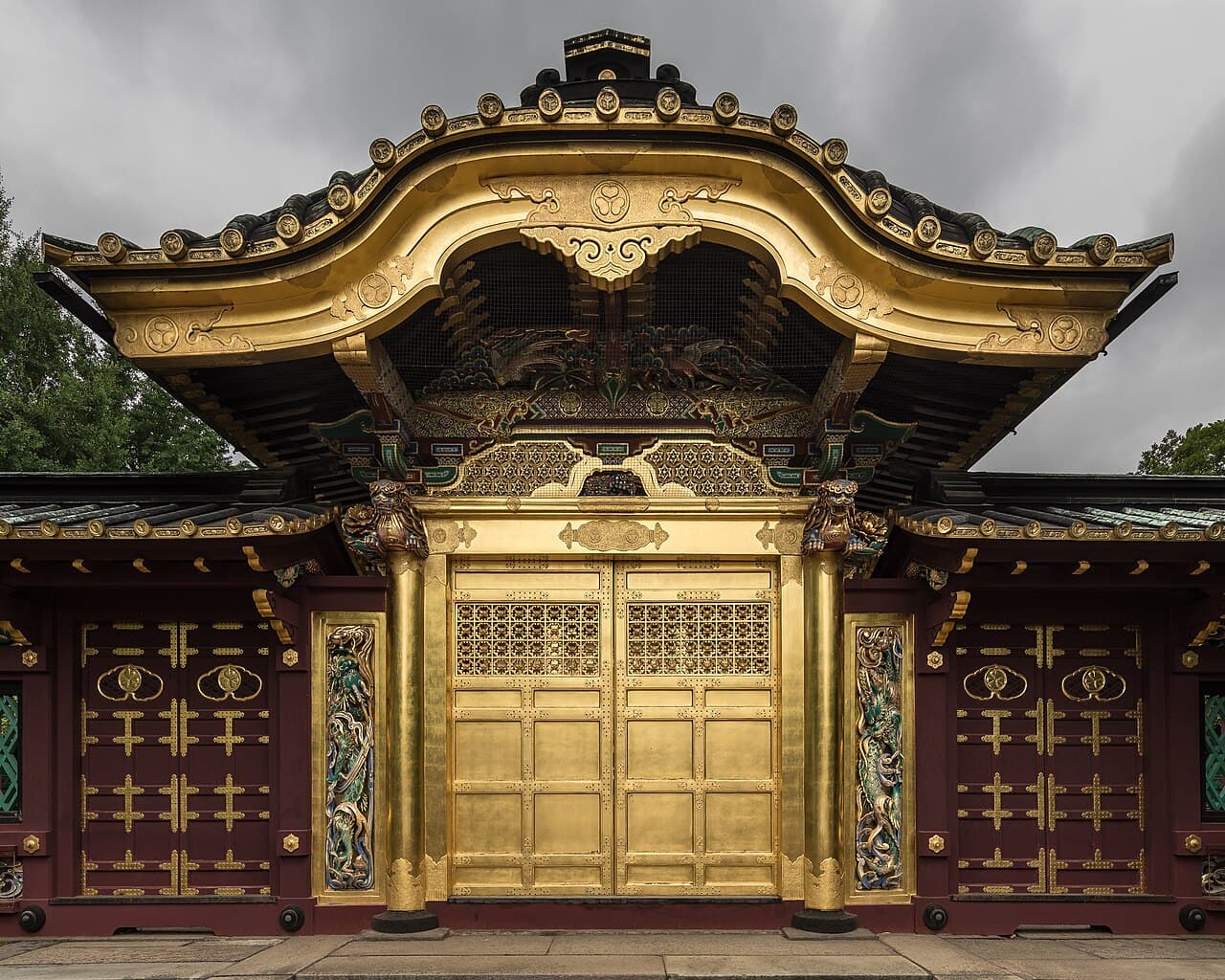
Bustling market street under the JR tracks: street food, dried snacks and bargain hunting. Kids like the chaos; it never feels like a museum.
- A favorite with budget-conscious travelers — set the kids a snack budget and let them loose.
Port-direct conveyor sushi near Ueno — fresh, fast and family-friendly. The default family dinner in Ueno.
Old-fashioned dagashi candy wholesaler in Ameyoko. Fill a bag of retro sweets for pocket change — a great kid souvenir stop.
- The dagashi wholesaler sits right on Ameyoko: fill a bag of retro sweets for the walk home.

Dinosaur skeletons and Japan's natural history under a big whale sculpture outside. The single most kid-proof museum in the city — hands-on, huge, and right by the zoo.
- Real dinosaur skeletons inside — make them your first stop.
- Museum morning done, browse Ameyoko's market street for snacks — the dagashi candy stop is the kid payoff.

Japan's oldest zoo, and the pandas are the reason everyone comes. Go at opening — the pandas and the monorail ride draw lines by midday. Plan a half day; there is shade and plenty of benches.
- Famous for its giant pandas — go straight there at opening before the lines build.
- Do the zoo in the morning, then the dinosaur museum after lunch — both sit in Ueno Park, a short walk apart.
Duck-and-leek ramen local favorite near Ueno Station. Rich bowls; lines move steadily at lunch.
Spacious apartment hotel with kitchens — a family-friendly Ueno pick, right by the zoo days. One base here keeps all three days easy.
- Apartment-style and suited to families — the kitchen makes breakfasts easy.
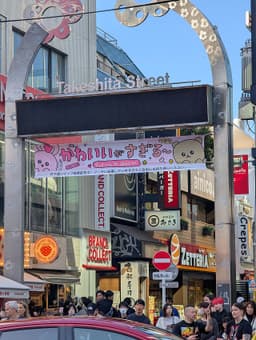
Harajuku's youth-culture strip: crepes, cotton candy, rainbow snacks and people-watching. This is the stop kids ask for by name. Go hungry.
- The strip is all about crepes, cotton candy and snacks — let the kids pick one stop.
Flat-rate conveyor-belt sushi in Harajuku: every plate 140 yen, open 11:00-23:00. The family lunch default — kids eat what they like, you count plates.
- Every plate is a flat 140 yen — let the kids order and pay by the stack.
- Lunch at the 140-yen sushi, then Takeshita Street is a short walk away — snacks on snacks.
The original Harajuku crepe stand on Takeshita Street. Sweet crepes to go — the edible souvenir.
- The original crepe stand is on the strip itself: grab a crepe and keep people-watching.
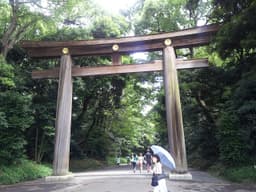
A forest shrine in the middle of the city, with towering torii gates and an iris garden. The gravel paths are shaded and flat — an easy walk even for short legs.
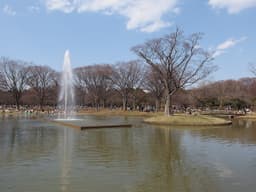
The big park between Harajuku and Shibuya. Picnics, run-around space and weekend street performers. The natural exhale between the two shopping streets.
- After the shrine's forest paths, Yoyogi Park is a short walk away — the place to let the kids run.
Cheap-and-cheerful unagi rice bowls — hitsumabushi from 800 yen, a three-minute walk from Ueno Station. The budget way to eat eel.
- Hitsumabushi starts at 800 yen — the budget way into unagi.
Stay put: ~43 min by subway back from Yoyogi Park tonight, ~12 min by subway to Nakamise Street in the morning.
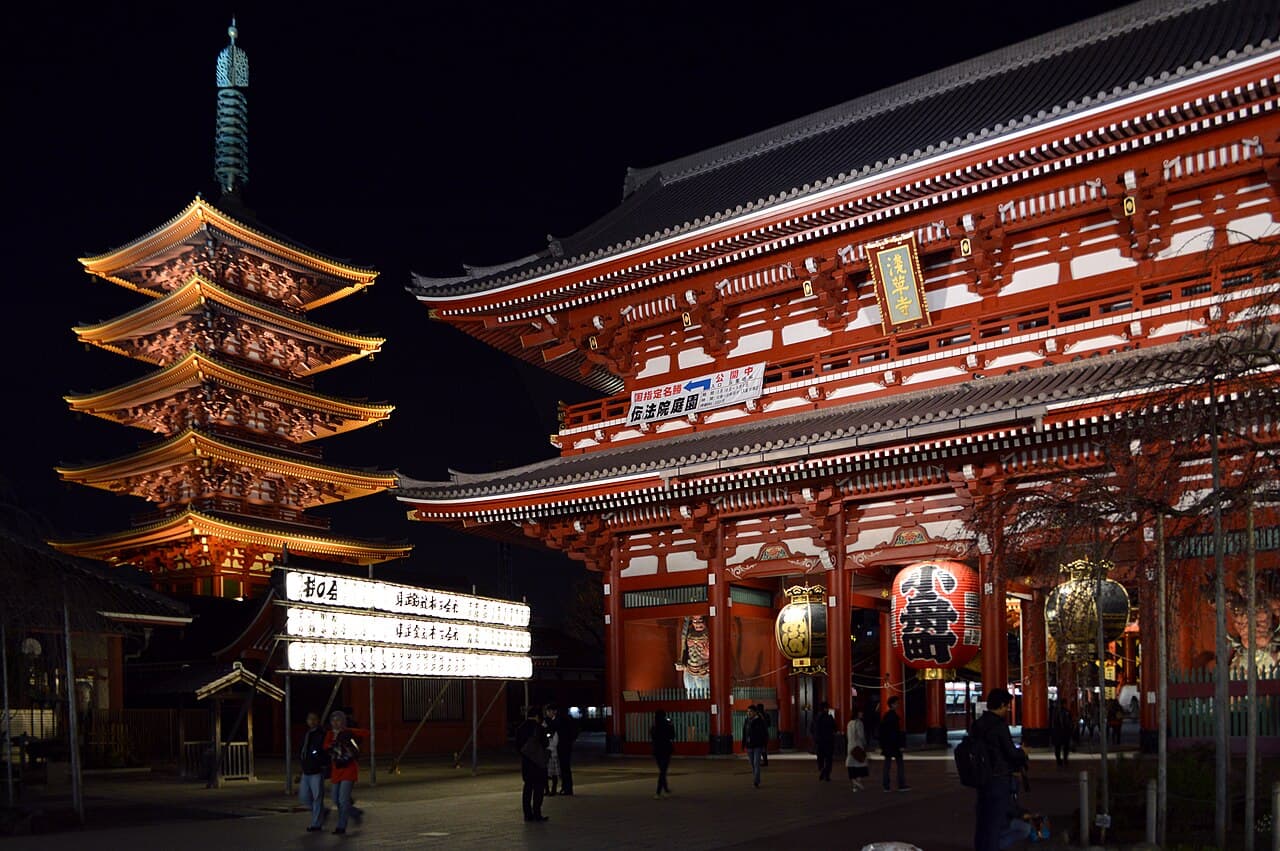
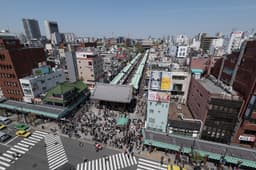
One of Japan's oldest shopping streets, running from the Thunder Gate to the temple. Come for the snack stalls — kids grab-and-go as they walk. Buy nothing and it is still a great stroll.
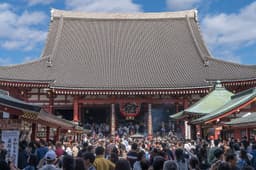
Go at opening, before the crowds arrive. Walk under the Kaminarimon gate, pick up a fortune slip at the main hall, and find the five-storied pagoda. Founded in 628 — the oldest temple in Tokyo.
- Founded in 628, Tokyo's oldest temple — arrive at opening to beat the crowds.
- See the temple at opening, then the Nakamise snack stalls wake up as you walk back out.
Tempura institution near Senso-ji since 1887, famous for its tendon rice bowls. A sit-down lunch the whole family can handle — crispy, fast, kid-approved.
- Serving tempura since 1887 — the tendon rice bowl is the order.
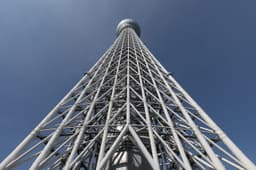
Tokyo's broadcasting tower with observation decks and big-city views. Do it in the afternoon as a payoff stop, not first thing. Book deck tickets ahead on busy weekends.
Cook-your-own okonomiyaki and monjayaki in a folk-craft house near Senso-ji. Kids grill their own dinner — dinner as entertainment.
Legendary melon-pan bakery on the Nakamise approach. The classic Asakusa snack: buy one warm and eat it walking. Kids remember this.
- The melon-pan bakery is on the Nakamise approach — buy one warm and eat it walking.
Stay put: ~18 min by subway back from the Skytree tonight, ~12 min by subway to Nakamise Street in the morning.
Where to stay in Tokyo
Ranked for family travelers on a comfortable budget. The places this plan sleeps in come first.
MONday Apart Premium Ueno
Spacious apartment hotel with kitchens — a family-friendly Ueno pick, right by the zoo days. One base here keeps all three days easy.
MIMARU Tokyo Asakusa Station
Apartment-style hotel with kitchenettes, built for families staying together. The practical family pick in Asakusa.
Asakusa View Hotel
Landmark high-rise by Senso-ji with Skytree-view rooms. A solid family base in old Tokyo.
Flights to Tokyo
Fly into Narita International Airport (NRT)
Flight results via Travelpayouts — we may earn a commission on bookings.
Getting around Tokyo
How to actually move around the city — transit, rideshare, bikes, and taxis.
Public transit
Trains and subways run the city — JR lines including the Yamanote loop plus the Tokyo Metro and Toei subway networks. A rechargeable IC card (Suica or Pasmo) works on all of them; paper day passes help only if you ride the subway a lot.
- Tokyo Subway Ticket (24/48/72h)
Unlimited rides on all Tokyo Metro and Toei subway lines; buy at airports and major stations.
Tip: For most visitors, a rechargeable IC card plus phone maps is simpler than juggling paper passes.
Rideshare
Uber operates in Tokyo, but only through licensed taxi companies — the app summons a regular taxi, not a private car. Expect taxi-meter pricing.
Bikes
Docked share bikes all over the city, handy for short hops between stations.
- Docomo Bike Share
Tokyo's big docked bike-share network — pick up and drop off at hundreds of ports around central Tokyo.
Tip: Register in the app before you need it; ports near stations fill up at rush hour.
Taxis
Flag licensed taxis at station ranks or hail one from your phone. Fares are metered and doors open automatically — don't grab the handle.
- GO taxi app
Japan's main taxi-hailing app — summons a licensed taxi with in-app payment; set destinations without speaking Japanese.
Tip: Works in Kyoto and Osaka too, so keep it for the whole trip.
Keep exploring
More itineraries for this trip.
- Photo: David Kernan · CC BY 4.05 days
5 Days in Tokyo & Osaka: The Food Lover's Itinerary
Five days eating your way from Tsukiji to Dotonbori: Tokyo's morning markets, old-town Asakusa, Ueno's market streets and Shinjuku's night alleys, then a shinkansen hop to Osaka for the castle, Shinsekai's kushikatsu counters and a Dotonbori finale. The plan re-plans itself around how you travel — pick a pace, budget and style and it reshuffles the days.
Read the itinerary → - Photo: David Kernan · CC BY 4.09 days
9 Days in Tokyo, Kyoto, Nara & Osaka: The Complete Golden Route
Japan's classic first-timer route, stretched to nine days with Nara in the middle: three days in Tokyo, three in Kyoto, a day trip to Nara, and two in Osaka. Tokyo brings the neon, the temples of Asakusa and the food halls of Ginza; the Shinkansen drops you in Kyoto for Fushimi Inari, Gion and Arashiyama; then it's south to Nara for Todai-ji's Great Buddha and the deer of Nara Park; and finally west to Osaka, Japan's kitchen, for Dotonbori street food, the castle and retro Shinsekai. The plan re-plans itself around how you travel: classic, foodie or family, fast or slow.
Read the itinerary → - Photo: David Kernan · CC BY 4.07 days
7 Days in Tokyo, Kyoto & Osaka: The Golden Route
Japan's classic first-timer week: three days in Tokyo, two in Kyoto, two in Osaka. Tokyo brings the neon, the temples of Asakusa and the food halls of Ginza; the Shinkansen drops you in Kyoto for Fushimi Inari, Gion and Arashiyama; then it's west to Osaka, Japan's kitchen, for Dotonbori street food, the castle and retro Shinsekai. The plan re-plans itself around how you travel: classic, foodie or family, fast or slow.
Read the itinerary → - Photo: David Kernan · CC BY 4.05 days
5 Days in Tokyo & Kyoto: Japan's Two Essential Cities
Japan's two essential cities in one trip: three days in Tokyo — Asakusa's temples, Shibuya's scramble, Shinjuku's neon, and Ginza's polish — then the Shinkansen west to Kyoto for two days of torii gates, bamboo groves, tea houses, and lantern-lit Gion lanes. First-timer friendly, with where to eat and how to travel between the cities.
Read the itinerary →