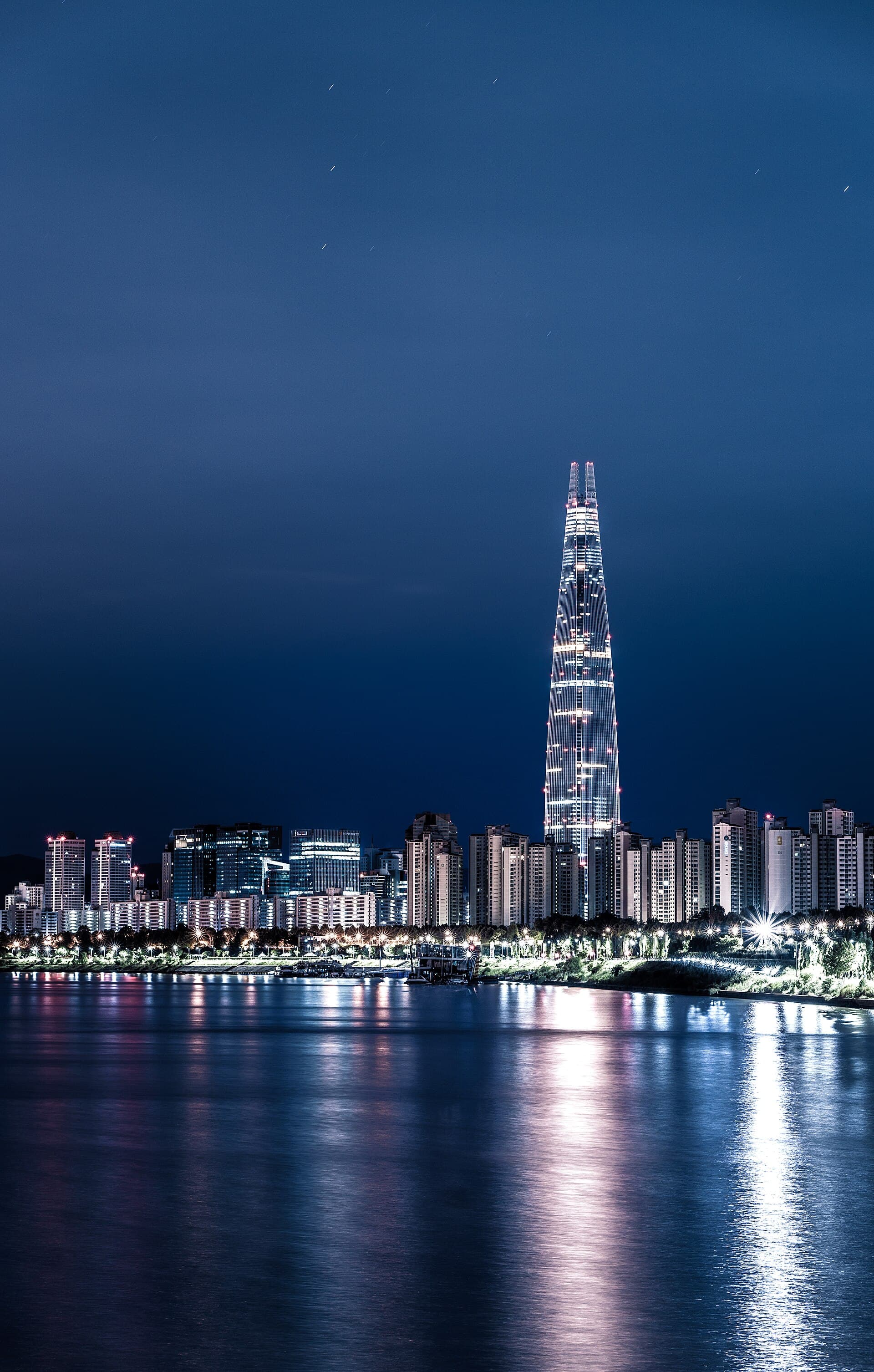
 Photo: mauveine.kim · CC0
5 Days in Seoul for Food Lovers: Markets, BBQ & Late-Night Streets
Five days of eating your way through Seoul: breakfast soup at Seoul's oldest restaurant, a dosirak lunchbox tray at Tongin Market, bindaetteok and yukhoe at 120-year-old Gwangjang Market, eight-flavor pork belly in Hongdae, dakhanmari past midnight near Dongdaemun, and makgeolli in Itaewon, with temple cuisine and a Michelin-starred table for the splurge nights. Answer a few questions and the plan re-plans itself around how you travel: your pace, your budget, your appetite.
Pick a style, a budget and a pace — the route and days below re-plan themselves.
15 stops · 10 meals · 5 hotelsThis is the editor’s pick.
5 days
Each day takes one part of Seoul, kept close so you walk more than you ride. The map shows the whole route — pick a day to zoom in.
A hanok bakery-cafe in Ikseon-dong known for souffle castella, cakes and a full drinks menu: a sit-down dessert stop rather than a quick takeaway counter.
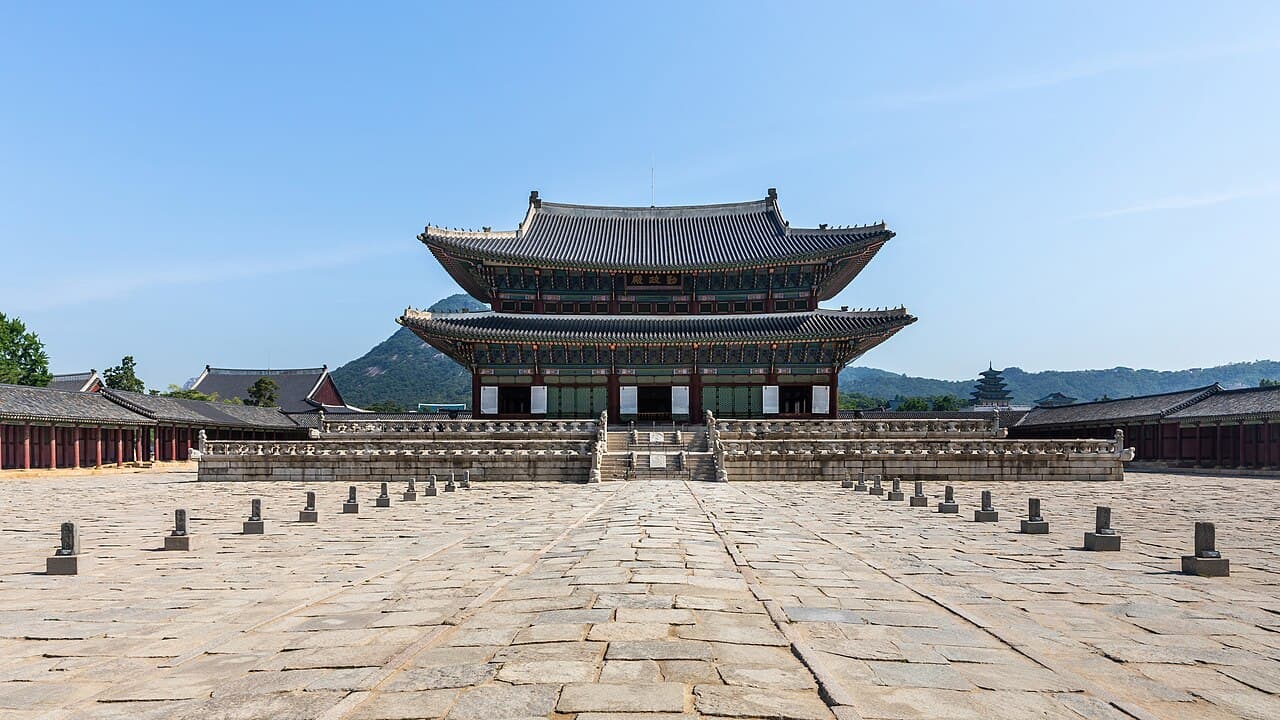
Joseon Dynasty's main palace, first built in 1395 and rebuilt in the 19th century. Watch the guard-changing ceremony at Gwanghwamun Gate, then wander the throne halls, pavilions and the folk museum grounds.
- Catch the guard-changing at 10:00 or 14:00, and plan a different palace for Tuesdays.
A DIY lunchbox cafe on the market's 2nd floor: buy yeopjeon brass coins, fill a tray from the market stalls, and eat upstairs.
- 10 coins for KRW 5,000 buys a tray of market dishes.
A historic hanok neighborhood west of Gyeongbokgung Palace. Quieter and more residential than Bukchon, with small galleries, cafes and Tongin Market nearby.
- Seochon first, market lunch second: walk the quiet hanok lanes, then buy your brass coins and fill a dosirak tray from the market stalls upstairs.
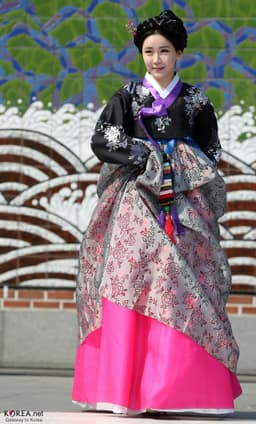
Seoul's best-known street for traditional crafts, antiques and souvenirs. Tea houses, galleries and calligraphy shops fill the main street and its alleys, with weekend craft stalls.

Seoul's oldest restaurant, opened 1904, serving milky seolleongtang ox-bone soup simmered 16-plus hours. Diners season it themselves at the table.
- Open weekdays 08:00-15:00 and 16:30-21:00, so plan around the midday break.
A smart 4-star in the heart of Insadong with 301 modern rooms, a rooftop breakfast lounge, and walking access to Jogyesa, Ssamziegil and the palaces.
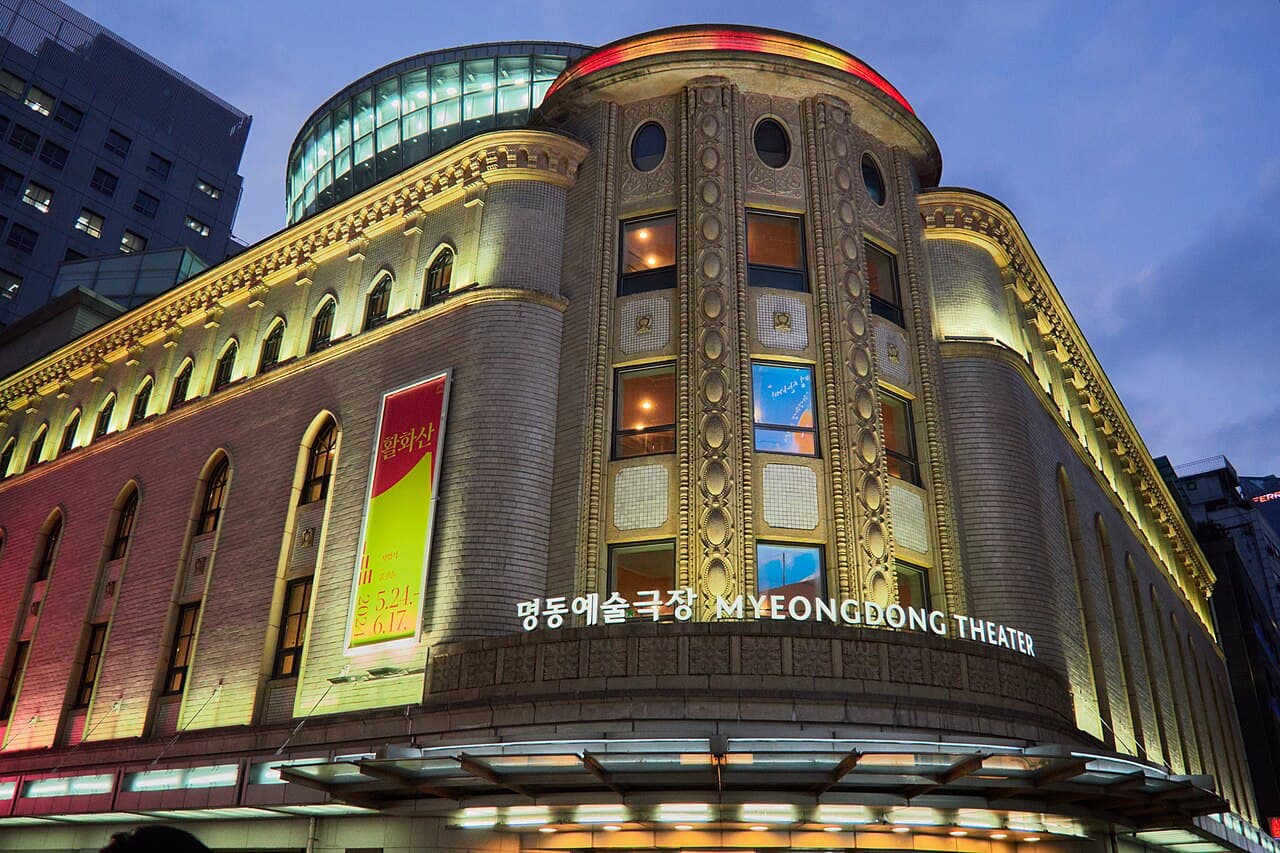
Worth the trip
A Pyongyang naengmyeon cold buckwheat noodle institution: clean chilled broth with buckwheat noodles, plus charcoal-grilled bulgogi.
- Closed on Mondays.
Closer: Myeongdong Kyoja, right on your way
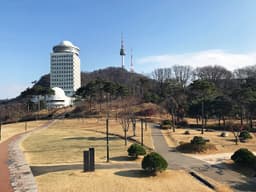
A mountain park around N Seoul Tower with forest trails, the Locks of Love plaza and sweeping city views. Cable car or shuttle bus to the top.
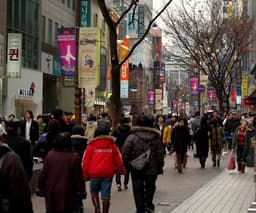
Beauty-shopping mecca of flagship cosmetics and fashion stores that turns into a street-food night market after dark. Arrive hungry in the evening, when the stalls take over.
- Street-food stalls take over the main strips in the evening, so plan this as a night-market stop.
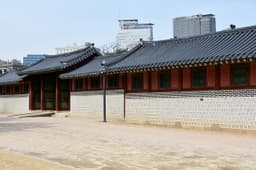
The palace by City Hall, ringed by the famous stone-wall road. Traditional halls stand beside Western-style stone buildings from 1900-1910, with a guard ceremony three times daily.
- The guard ceremony runs 11:00, 14:00 and 15:30, except Mondays.
The institutional kalguksu hand-cut noodle soup and mandu house in Myeongdong: fast, cheap, and always crowded at lunch.
- When the Myeongdong crowds peak, duck into Kyoja for the hand-cut kalguksu: fast, cheap and built for the lunch rush.
Switch bases tonight. Lotte's design-led 4-star, one minute from Myeongdong Street and the station: 250 rooms over 21 floors, a Korean buffet breakfast, gym, bar and meeting rooms.
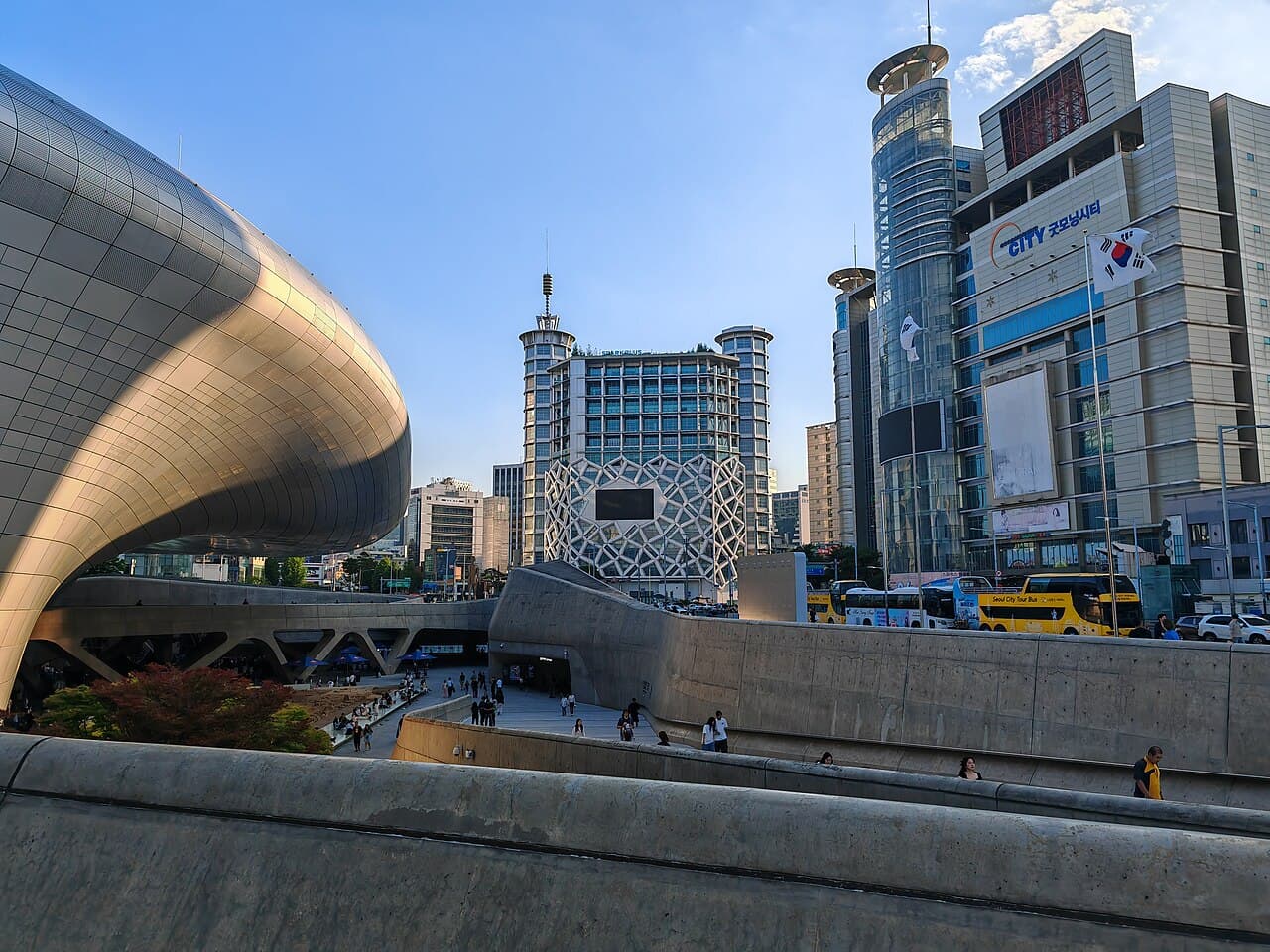
A historic-style alley coffee shop near Euljiro specializing in hand-drip coffee; desserts come from sister shop Hyemindang across the alley.
A 120-year-old covered market famed for bindaetteok mung bean pancakes and yukhoe beef tartare. Chaotic, loud and delicious, a 10-15 minute walk from DDP.
Handmade mandu chain branch near Dongdaemun: steamed, fried and soup dumplings made fresh daily.
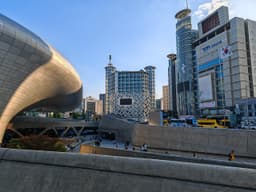
Zaha Hadid's curving aluminum landmark, opened in 2014. Exhibition halls, a design museum and the History & Culture Park; the complex is free and exhibitions charge separately.
- DDP first, then dumplings: Bukchon Son Mandu's handmade mandu, steamed and fried, is three minutes from the plaza.
A hillside neighborhood turned open-air gallery: 70-plus murals and installations line the steep lanes, with city views from the top.
A TV-famous KBBQ in the old market streets: thick samgyeopsal with vegetables and a hearty kimchi jjigae.
- After the market crawl, go deeper into the old streets for thick samgyeopsal and kimchi jjigae at EunJoo Jeong.
Switch bases tonight. A compact 46-room 3-star near Gwangjang Market and DDP: fridges and bidets in every room, free in-room WiFi, terrace and garden, no on-site restaurant.
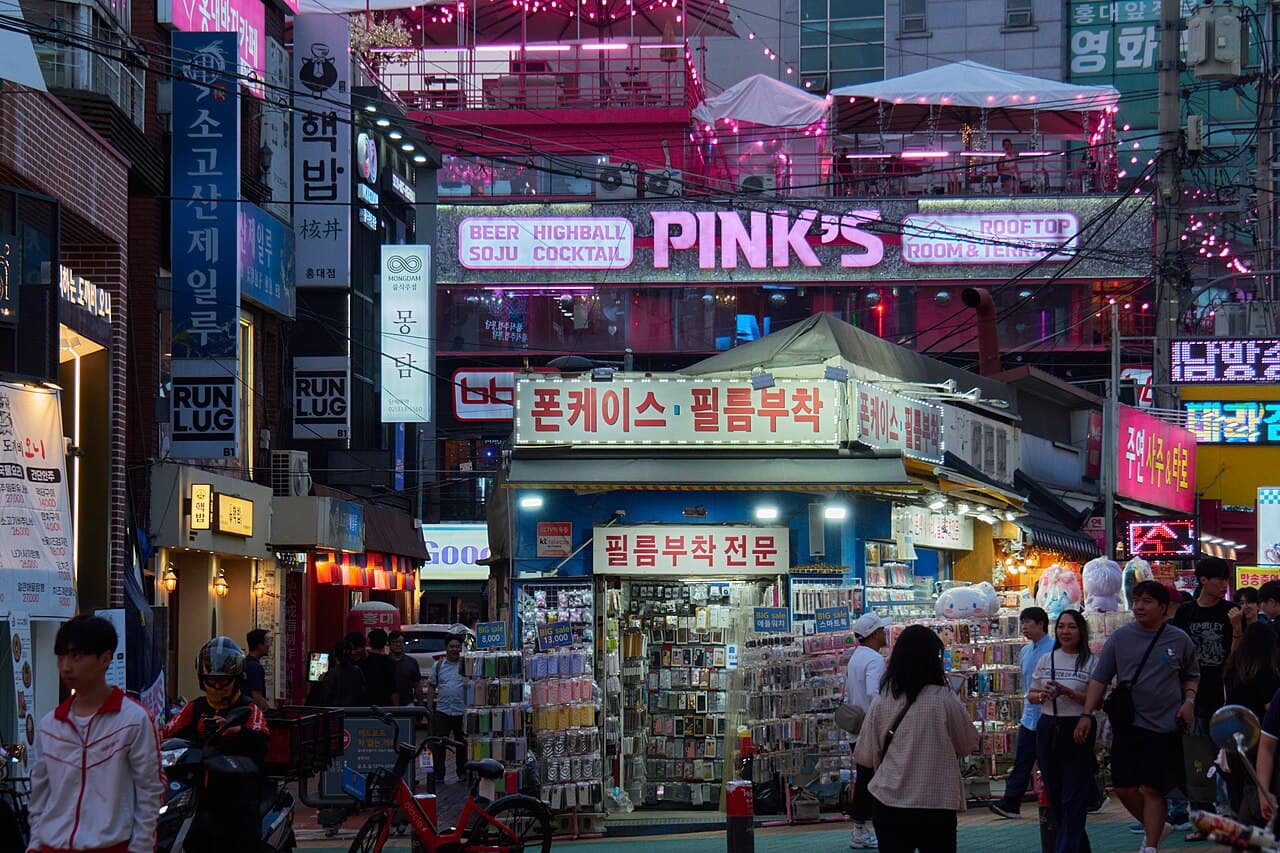
A well-known Korean BBQ house in Myeongdong: marinated galbi and pork belly grilled at the table, popular with visitors.
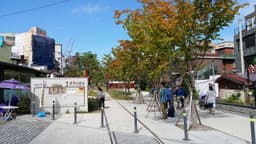
Disused Gyeongui Line railway tracks turned into a 6.3 km green corridor. The Yeonnam-dong stretch is picnic-central.
Picasso's Street and the murals around Hongik's back gate: graffiti-laden walls, street performances and the free market.
A neighborhood food market in Mangwon-dong near the Han River. Come hungry for fried chicken, tteokbokki and market snacks at neighborhood prices.
Pork belly in eight flavors, ginseng to curry, grilling on tabletop stations near Hongik University. The classic Hongdae BBQ night.
- The eight pork-belly flavors run from ginseng to curry: order across them.
- Murals by day, pork belly by night: Palsaik's eight flavors of samgyeopsal sit in the Hongik back streets.
Switch bases tonight. A laid-back 94-room 3-star, a 5-minute walk from Hongik University Station: an Italian restaurant, bar, free self-parking and 12 PM checkout.
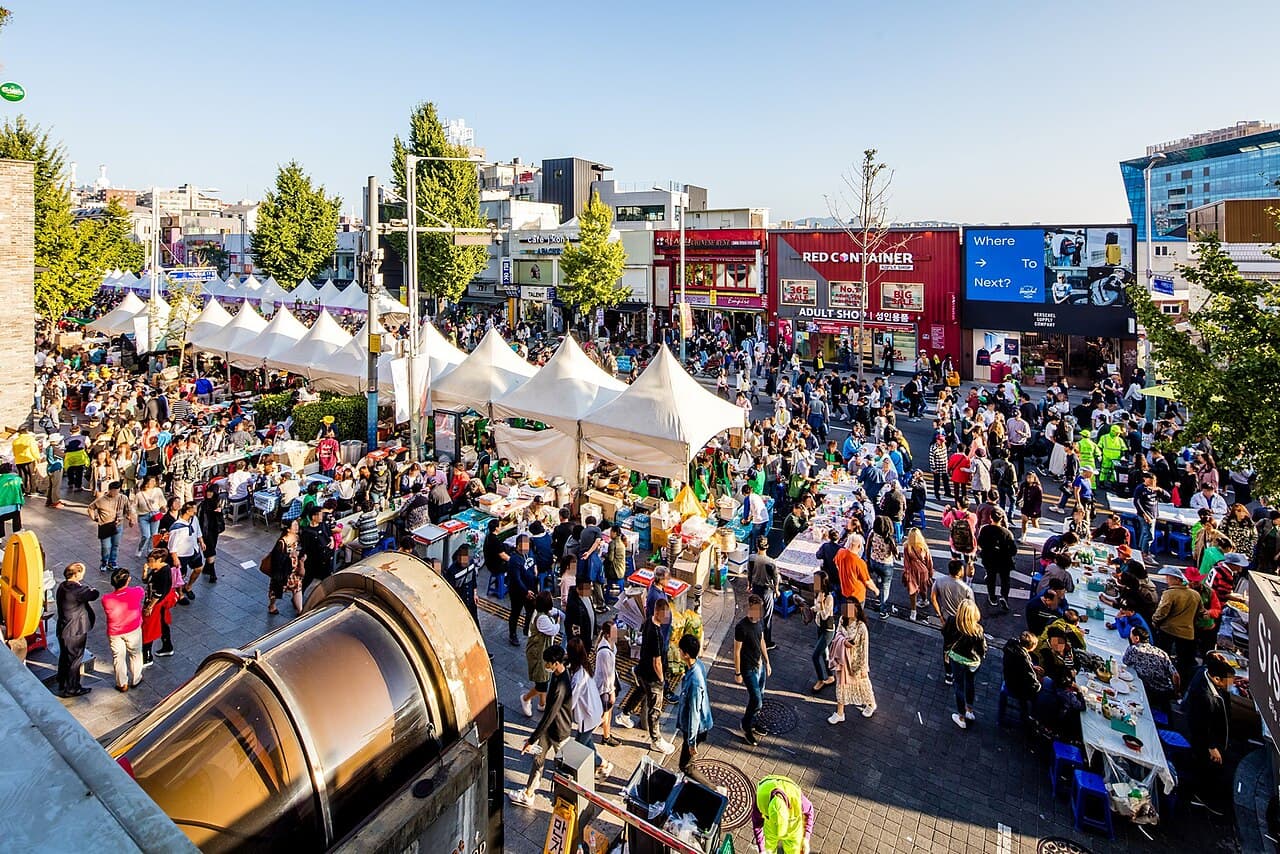
A beloved Dohwa-dong cafe and bakery since the 2010s: pour-overs from single origins and freshly baked pastries like the coffee bread and Nutella scone, in a hanok-vintage interior.
- Pastries bake fresh roughly every 30 minutes.
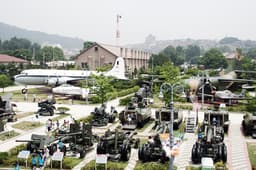
A free museum of Korean military history on the former army headquarters site. Six indoor halls plus an outdoor exhibition of tanks, jets and ships.
- The permanent exhibition is free; the museum is closed Mondays.
A vintage-decorated hole-in-the-wall in Itaewon serving a famous set meal: rice, soybean-paste soup, and a spread of 18-28 banchan with unlimited refills.
- 28 banchan with rice and jjigae for about KRW 9,000.
The Samsung Foundation's museum in Hannam-dong: three buildings by Mario Botta, Jean Nouvel and Rem Koolhaas holding traditional Korean art and modern exhibitions.
- The traditional Korean art collection is free; the museum runs Tuesday to Sunday.
- The Leeum's art pairs with a set meal: Sigol Bapsang's 28-banchan spread with rice and jjigae for about KRW 9,000.
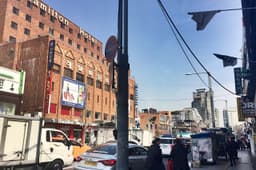
Seoul's most multicultural street, lined with 2,000 shops and 40 foreigner-run restaurants on World Food Street, plus the antique furniture stretch.
A Hannam burger joint with juicy smash-style burgers, shrimp and pulled-pork specials, and a loud, trendy dining room.
Switch bases tonight. A friendly 3-star on Itaewon-ro, renovated in 2025: free WiFi, fitness center, valet parking, 24-hour front desk and concierge near the National Museum of Korea.
Where to stay in Seoul
Ranked for foodie travelers on a comfortable budget. The places this plan sleeps in come first.
Nine Tree by Parnas Insadong
A smart 4-star in the heart of Insadong with 301 modern rooms, a rooftop breakfast lounge, and walking access to Jogyesa, Ssamziegil and the palaces.
L7 Myeongdong
Lotte's design-led 4-star, one minute from Myeongdong Street and the station: 250 rooms over 21 floors, a Korean buffet breakfast, gym, bar and meeting rooms.
Acube Hotel Dongdaemun
A compact 46-room 3-star near Gwangjang Market and DDP: fridges and bidets in every room, free in-room WiFi, terrace and garden, no on-site restaurant.
9 Brick Hotel
A laid-back 94-room 3-star, a 5-minute walk from Hongik University Station: an Italian restaurant, bar, free self-parking and 12 PM checkout.
Imperial Palace Boutique Hotel Itaewon
A friendly 3-star on Itaewon-ro, renovated in 2025: free WiFi, fitness center, valet parking, 24-hour front desk and concierge near the National Museum of Korea.
Flights to Seoul
Fly into ICN (ICN)
Flight results via Travelpayouts — we may earn a commission on bookings.
Getting around Seoul
How to actually move around the city — transit, rideshare, bikes, and taxis.
Public transit
Seoul's subway is the fastest way to move around the city: nine numbered lines plus the AREX airport line, all with English signage and announcements. Buy a T-money card at any convenience store and tap in everywhere.
- Seoul Metro
Nine color-coded subway lines (1 to 9) plus the AREX airport express connect every major neighborhood, running roughly 5:30am to midnight. The base fare is about 1,400 to 1,550 KRW with a T-money card and distance-based beyond 10 km; transfers between lines are free.
Tip: Download KakaoMetro or Subway Korea for English route planning and real-time arrivals.
- T-money card
Rechargeable contactless card for the subway, buses, and most taxis across South Korea, also usable at convenience stores. Buy the card for a few thousand won at any convenience store or station vending machine and top up with cash.
Tip: Tap in and out to get transfer discounts between subway and bus.
Rideshare
Kakao T is the dominant ride-hailing app in Korea and the default way to book a car with an English interface.
- Kakao T
Korea's dominant ride-hailing app with English support: book private cars or metered taxis, see the fare estimate upfront, and pay with a linked international card or in-app payment.
Tip: Register and verify your account before you need a ride late at night.
Bikes
Seoul Bike (Ddareungi) is the city's public bike-share system, handy for riverside paths and short hops between subway stations.
- Seoul Bike (Ddareungi)
Public bike-share with stations across the city, including along the Han River parks and near major subway stations. Rent by the hour or buy a day pass in the app.
Tip: The Han River cycling paths are the best place to ride; these are heavy city cruisers, not road bikes.
Taxis
Metered taxis are plentiful and cheap by global standards; hail one on the street or through Kakao T. Fares start around 4,800 KRW.
- Street and app-hailed taxis
Regular metered taxis run 24 hours and are easy to hail on main streets; Kakao T lets you request one with an English interface and upfront estimates. Late-night surcharges apply roughly midnight to 4am.
Tip: Have your destination written in Korean (Naver Map or KakaoMap shows it) in case the driver does not speak English.